
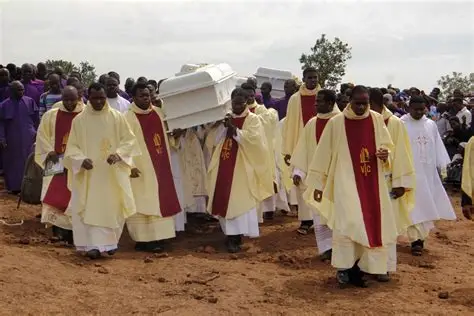
Images of burned villages, mass graves, and desperate families are not abstract headlines. They are human emergencies. Nigeria’s insecurity from Islamist insurgency in the northeast to massacres and raids in central states has produced a mounting humanitarian crisis that affects Christians and Muslims, farmers and herders, and entire communities. The question now being asked in capitals from Washington to Abuja is blunt: when does moral outrage turn into meaningful international action? And what kind of action actually helps?
Numbers and narratives matter here. Multiple watchdogs and human-rights organizations have documented lethal attacks on civilian communities across Nigeria this year; some reports focus specifically on attacks targeting Christian villages and displaced congregations. At the same time, independent conflict datasets show that violence has affected both religious communities, revealing a complex, multi-actor crisis, not a simple sectarian script. These conflicting figures are part of why policymakers hesitate and why victims keep waiting for help.
Against that backdrop, U.S. rhetoric has shifted from expressions of concern to harder talk. In recent days, U.S. officials and politicians have discussed designating Nigeria under religious-freedom measures and even floated the possibility of punitive actions; prominent U.S. voices warned of cutting aid or broader measures if the Nigerian government does not respond forcefully. That message has provoked alarm in Abuja about sovereignty and in Washington about whether unilateral threats can protect civilians or will instead poison diplomacy.
So, what are the realistic options and the human costs of international intervention?
1) Humanitarian assistance and protection. The least contentious and most immediate form of intervention is scaled humanitarian aid: food, shelter, medical care, trauma counseling, and support for internally displaced people. Donors can and should prioritize protection programming that helps communities rebuild local defenses (safe shelter, early-warning systems) and funds civil-society groups that document abuses and help survivors. This approach reduces immediate suffering without violating sovereignty, and it’s the place where lives are saved fastest.
2) Diplomatic pressure and accountability tools. Governments can use naming, shaming, and targeted sanctions against individuals credibly implicated in attacks a middle path that signals cost without military escalation. The U.S. “Country of Particular Concern” designation and similar measures can be useful if carefully calibrated, combined with clear benchmarks for de-escalation and protection. But blunt sanctions risk cutting funds that help civilians unless humanitarian carve-outs are explicit. Recent policy moves and threats have already raised questions about proportionality and unintended harm.
3) Security assistance, training, intelligence, and capacity building. Many Nigerian officials have welcomed assistance that strengthens local capacity to protect communities: better policing, human-rights-compliant military training, border control, and intelligence sharing. This kind of support can be effective, especially when paired with anti-corruption and accountability reforms. Yet foreign security aid must be conditional and monitored; history shows it can backfire if it props up abusive actors or is poorly executed.
4) Peacekeeping or foreign military strikes high risk, high stakes. Direct military intervention or strikes to dismantle extremist camps are politically and legally fraught. They may yield tactical gains but risk civilian casualties, blowback, and a sovereignty crisis. Threats of unilateral force also complicate diplomatic channels and can make recovery harder for displaced populations. The line between protective action and escalation is thin; for most humanitarian responders, boots on the ground from foreign armies are a last resort.
5) International monitoring, judicial avenues, and multilateral engagement. International observers, UN human-rights missions, or referrals to international justice mechanisms can document atrocities, deter future crimes, and support long-term accountability. These steps are slower but build a record that may matter for justice and reconciliation down the road. They also help depoliticize the crisis by moving it into neutral multilateral spaces.
How should policymakers balance these options? Here are pragmatic principles that prioritize civilians:
-
Do no harm: Any action must protect civilians first, avoiding measures that reduce humanitarian access or punish the needy. Sanctions without humanitarian exemptions are dangerous.
-
Follow the evidence: Policymakers must rely on verifiable data (not only viral claims) to direct responses and avoid inflaming communal narratives. Independent monitoring must be scaled up.
-
Prioritize protection and aid: Immediate life-saving assistance and safe spaces for displaced people should be the first dollar spent.
-
Support accountable security reform: Training and intelligence help, but they must come with oversight to prevent abuses.
-
Use multilateral mechanisms: Where possible, work through regional bodies (ECOWAS, AU) and the UN to ensure legitimacy and burden-sharing.
Finally, an honest word about politics: intervention talk is rarely neutral. Domestic political pressures in donor countries and in Nigeria often shape responses. There have already been powerful domestic calls in the U.S. for stronger action; Abuja has counter-accused critics of exaggerating figures and undermining sovereignty. The job of responsible humanitarian policy is to cut through the noise and ask a single question: what will save lives today and build durable peace tomorrow?
The human answer is straightforward. People need food, medicine, shelter, protection, and credible pathways to justice. International tools from aid to sanctions to limited security assistance can help if used carefully and in partnership with Nigerians on the ground. Military adventurism and grandstanding do not save villages; steady, accountable, and evidence-based support does.
If the international community is serious about protecting victims in Nigeria, it must act with humility and urgency: put civilians first, measure impact, and be willing to stay the long, complicated course of recovery and reconciliation.

Leave a Reply