
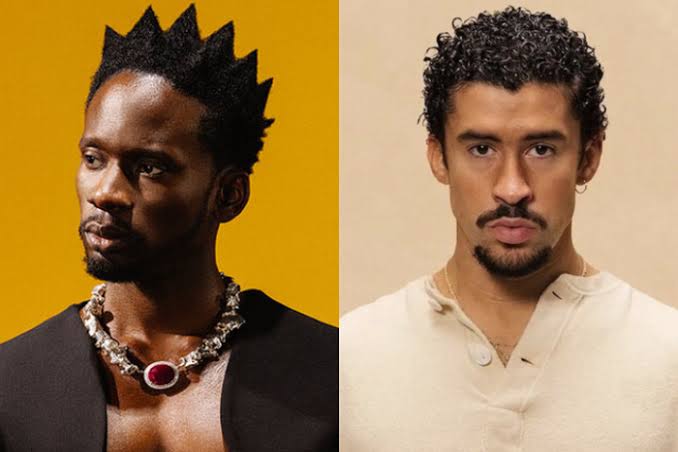
The clash between Mr Eazi and Bad Bunny has taken a decisive turn, one that shifts the story from a fight over creative ownership to a battle over legal fallout.
What began as a high-profile copyright dispute rooted in Afrobeats’ global rise has now moved into a different phase. Following the dismissal of the case centered on Joeboy’s “Empty My Pocket” and Bad Bunny’s “Enséñame a Bailar,” the focus is no longer just on alleged infringement. It’s now about who bears the cost of the fight itself.
At the heart of the original dispute was Mr Eazi, through emPawa Africa, accusing Bad Bunny and his label Rimas Entertainment of using elements of Joeboy’s record without proper clearance specifically pointing to missing songwriting credit, publishing splits, and producer recognition. The claim tapped into a broader and increasingly urgent conversation: how African music is used, credited, and monetized on the global stage.
Rimas Entertainment pushed back from the beginning, maintaining that the track in question had been legally acquired through a third party and that due process had been followed. The disagreement exposed a deeper issue that continues to haunt cross-border music deals unclear ownership chains and conflicting claims over who actually controls the rights to a record.
Now, with the case dismissed, the narrative has shifted.
Bad Bunny’s side has reportedly moved to recover legal costs, effectively suing back to recoup expenses incurred during the dispute. It’s a move that adds a new layer of tension, reframing the situation from a creative rights battle into a financial one. What was once about attribution and royalties is now also about accountability for litigation.
The dismissal itself doesn’t necessarily resolve the underlying questions that sparked the conflict. It doesn’t erase the broader concerns around how African records are sampled, interpolated, or reinterpreted in global hits. Instead, it highlights how difficult it can be to prove ownership and enforce rights across jurisdictions, especially when multiple parties are involved in the creation, distribution, and licensing of a song.
For Mr Eazi and emPawa, the case was always positioned as part of a bigger mission protecting African intellectual property in an industry where influence often travels faster than contracts. That mission doesn’t disappear with a dismissal. If anything, it underscores how much work still needs to be done in tightening legal frameworks and ensuring that African creators are properly represented in global deals.
For Bad Bunny and his team, the outcome reinforces their stance that the process they followed was legitimate and their move to seek legal costs suggests confidence in that position. It also sends a message to the wider industry: disputes of this scale don’t just carry reputational risks, they come with real financial consequences.
Zooming out, the situation remains one of the most telling case studies in today’s music business. Afrobeats and African sounds are now deeply embedded in global pop, Latin music, and beyond. But as the sound travels, the systems governing ownership, clearance, and compensation are still catching up.
The result is friction.
And that friction is exactly what this saga represents.
It’s no longer just about whether a song was used without permission. It’s about how the industry defines permission in the first place who grants it, who verifies it, and who is ultimately responsible when those lines blur.
Even with the case dismissed, the conversation is far from over. If anything, this new chapter where legal costs and counterclaims take center stage shows that the stakes have only grown.
Because in a global music economy worth billions, being right isn’t always enough.
You also have to prove it.