
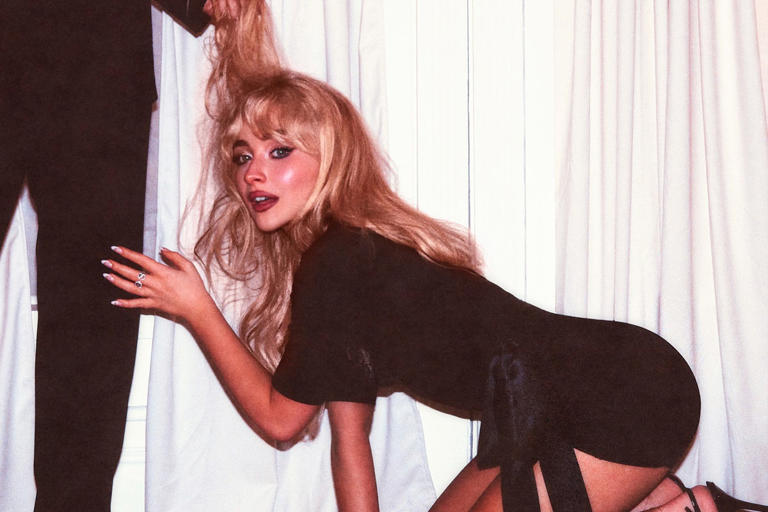
In recent days, Man’s Best Friend the latest project from pop singer Sabrina Carpenter has dominated headlines, not just for its music but for the strong reactions to its original cover art. Sabrina has now broken her silence, clarifying the deeper emotional and symbolic intent behind the controversial image.
What the Cover Shows & Why It Sparked Outrage
The artwork for Man’s Best Friend features Carpenter on all fours as an anonymous figure grips a fistful of her hair. Critics including social-justice organizations condemned the image, calling it degrading, triggering, and evocative of submissive or dehumanizing power dynamics.
Given the history and symbolism of such imagery, many interpreted it as endorsing violent or misogynistic tropes, rather than critiquing them a reading that made the public backlash swift and severe.
Sabrina’s Defense, Emotion, Autonomy and Artistic Honesty
In a recent interview with Variety (Hitmakers Issue), Carpenter explained the image’s meaning and it’s far more personal than sensational. She says the cover was meant to metaphorically represent how she felt in past relationships: “emotionally yanked around,” caught between control and vulnerability.
As she put it:
“It was about how people try to control women, and how I felt emotionally yanked around by these relationships, how much power you’re allowing yourself to give them.”
Carpenter further clarified:
“You can be so in control and so not in control at the same time, those are choices.”
She says the album and this imagery reflects her own emotional journey: vulnerability, mistakes, self-awareness, and the messy reality of love and heartbreak.
Acknowledging the controversy, she didn’t shy away from critics: “It meant one thing to me and 100 things to other people,” she said. Still, she stands by her interpretation while respecting different perspectives. Alternate Cover, But Not a Walk Back
After the initial backlash, Carpenter released an alternate, black-and-white cover, a more conventional portrait cheekily tagging it “approved by God.”
She has made clear, however, that the alternate is less a concession and more an option: the original concept remains integral to her artistic statement.
Why It Matters? Art, Agency & The Power of Interpretation
This controversy crystallizes a recurring tension in modern pop and art: how artists use provocative imagery to confront real feelings, and how public perception can diverge sharply from intent. Sabrina Carpenter’s case shows how art can aim to expose emotional pain and power dynamics but once released, the image becomes owned by the audience, open to interpretation, critique, or even rejection.
For Carpenter, the cover wasn’t meant as a marketing stunt or shock tactic but as personal and honest expression. Whether people accept that or not, her explanation forces us to consider how we consume art, what we expect from visuals tied to music, and how quickly symbolism transforms under the glare of public opinion.

Leave a Reply