
There was a time when African artists were told quietly, consistently to adjust. Smooth out the edges. Translate the language. Fit the format. Global success, the thinking went, required a kind of cultural compromise.
What’s happened instead is the opposite.
African music didn’t dilute itself to reach the world it doubled down on who it was. And in doing so, it reshaped the sound of global pop.
From Lagos to Johannesburg, Accra to Nairobi, the explosion of Afrobeats, Amapiano, and Afro-fusion isn’t just a story of catchy records or streaming milestones. It’s a story of culture moving at scale of identity becoming export, and authenticity becoming the strategy.
At the center of it all is language.
Spend enough time with the biggest African records of the past decade and you’ll notice something: they aren’t trying to explain themselves. Yoruba, pidgin, Zulu, Swahili these languages move freely through hooks and verses, often without translation, yet still landing with audiences thousands of miles away. The connection isn’t built on comprehension; it’s built on feeling.
That’s the shift.
Global listeners are no longer demanding entry points, they’re embracing immersion. The music doesn’t meet them halfway; it pulls them all the way in.
And then there’s the rhythm.
African music has always operated on a different kind of timing layered percussion, elastic grooves, drums that feel alive rather than programmed. For years, those textures sat outside the rigid structures of Western pop. Now, they’re redefining it. The bounce of Amapiano’s log drum, the swing of Afrobeats percussion these aren’t just stylistic choices anymore. They’re becoming the backbone of global production.
You can hear it everywhere.
Pop records that lean looser, hip-hop tracks that borrow bounce, electronic music that dips into African drum patterns. The influence is no longer subtle, it’s foundational.
But the sound is only part of the story.
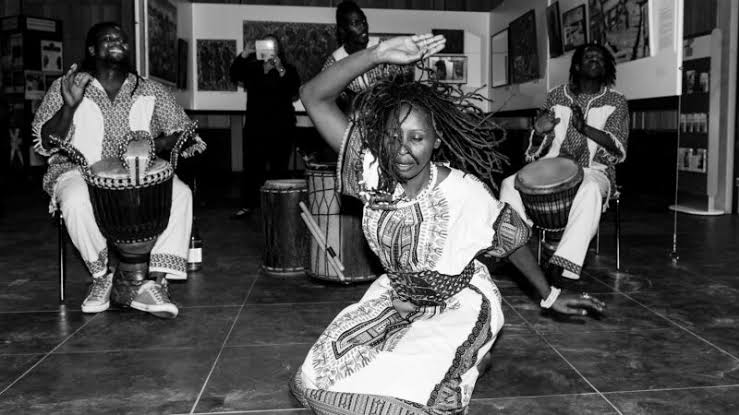
What African artists have understood instinctively, almost is that music doesn’t travel alone. It moves with visuals, with energy, with context. Dance has become one of the most powerful accelerators in that equation. From street-born movements to choreographed routines, African dance culture has turned songs into global rituals. A track doesn’t just play it arrives with a motion, something fans can participate in, reinterpret, and spread.
Social media didn’t create that dynamic. It amplified it.
The same goes for fashion. The new wave of African stars isn’t dressing to blend in they’re dressing to stand out, pulling from tradition, street culture, and personal expression to build a visual identity that matches the music. It’s cohesive. It’s intentional. And it reinforces a simple idea: this isn’t borrowed culture it’s original.
That clarity has shifted the power dynamic.
For years, the global music industry operated on a one-way street, with validation flowing from Western markets outward. Now, African artists are operating from a different position. Collaborations still happen, but they feel less like co-signs and more like crossroads meeting points between equals.
You see it in the credits.
You hear it in the production.
You feel it in the reception.
And behind the scenes, the infrastructure is finally catching up to the moment. Streaming platforms, digital distribution, and direct-to-fan channels have removed many of the traditional barriers that once filtered African music through external gatekeepers. A song can move from a studio in Lagos to a global playlist overnight, carrying its cultural DNA intact.
That immediacy has changed everything.
Because it allows culture to travel uncompromised.
Of course, growth brings tension. As African music becomes more global, questions around dilution, commercialization, and identity start to surface. How far can the sound stretch before it snaps? What happens when global demand begins to shape local output?
So far, the most compelling artists have found a way to navigate that space without losing themselves. They’re evolving, but not erasing. Expanding, but not abandoning.
And that’s why this moment feels different from previous waves.
It doesn’t feel temporary.
Because what’s driving it isn’t just sound, it’s heritage, language, rhythm, and lived experience. The kind of elements that don’t fade when trends shift. The kind that build movements rather than moments.
African music didn’t arrive by chance.
It arrived by being exactly what it is.
And now that the world is locked in, the message is clear:
The future of global music won’t just be influenced by African culture.
It will be built around it.