
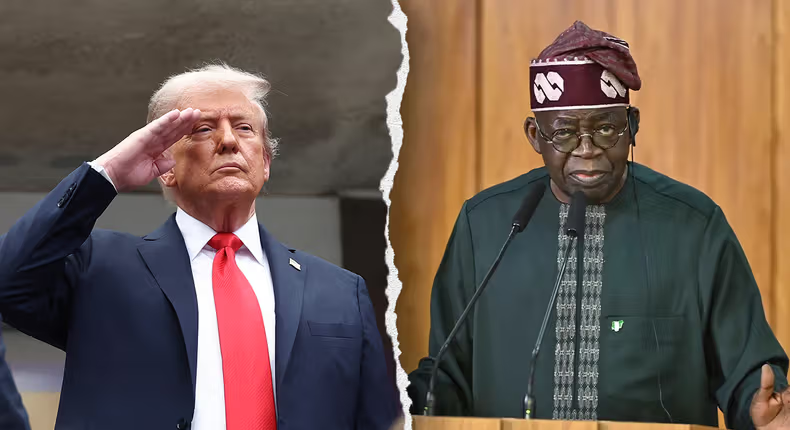
Lagos / Washington D.C. — Nigerian financial markets tumbled on Monday after U.S. President Donald Trump threatened potential military action and the suspension of aid, citing what he described as the Nigerian government’s failure to curb attacks on Christians by Islamist militants.
Nigeria’s dollar-denominated bonds suffered sharp losses across the board, with long-dated notes hardest hit. According to Bloomberg data, the nation’s bonds maturing in 2047 dropped 0.6 cents to 88.26 cents on the dollar by mid-morning Lagos time, contributing to a sell-off that placed all ten of the day’s worst-performing emerging-market bonds from Nigeria.
Trump, in a post on Truth Social, said he had instructed the Pentagon to “prepare for possible action” and warned of an immediate suspension of U.S. aid to Nigeria, Africa’s most populous nation and a key OPEC member.
“The timing could hardly be worse for Nigeria,” said an analyst at Lagos-based investment bank Cardinal Capital. “The country is only just beginning to relax monetary policy after years of tight controls, with the Central Bank of Nigeria encouraged by a recent dip in inflation.”
Economic Shockwaves
The U.S. remains one of Nigeria’s largest economic partners. Bilateral trade in goods and services reached approximately $13 billion in 2024, according to the Office of the U.S. Trade Representative. The sudden threat of military action and aid suspension has raised concerns over multiple fronts, including trade finance, energy exports, defence procurement, and humanitarian programs.
Markets also fear potential knock-on effects under the African Growth and Opportunity Act (AGOA), which provides duty-free access for African goods to the U.S. Any curtailment could significantly affect Nigerian exporters, particularly in textiles, agriculture, and manufactured goods.
Government Pushback
President Bola Tinubu quickly rejected Trump’s remarks, describing them as a misrepresentation of Nigeria’s “consistent and sincere efforts to safeguard freedom of religion and belief for all Nigerians.” The president emphasized ongoing measures to combat violence, improve community relations, and strengthen security across regions affected by Islamist militancy.
“Nigeria remains committed to protecting all citizens, regardless of faith, and to fostering peaceful coexistence,” Tinubu said in a statement.
Market and Policy Implications
The sell-off underscores Nigeria’s vulnerability to geopolitical risks and external political pressures. Emerging-market investors, already cautious about Nigeria’s debt levels and fiscal consolidation, reacted swiftly to the threat. Analysts warned that sustained tensions could slow Nigeria’s economic recovery and complicate the Central Bank’s efforts to stimulate growth.
“Even the hint of aid suspension or sanctions can have an outsized effect on market confidence,” noted an emerging markets strategist in London. “Nigeria’s bonds are sensitive to both domestic policy and international political headlines.”
The incident highlights the interconnectedness of global finance and diplomacy, where statements from a single world leader can instantly ripple through sovereign debt markets, foreign exchange, and bilateral trade relations.
As Nigeria seeks to maintain momentum in its economic recovery, the coming weeks will test both its diplomatic resilience and its capacity to reassure investors that it remains a stable destination in the eyes of the global financial community.

Leave a Reply