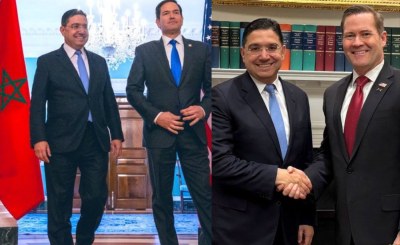
RABAT — In a gesture underscoring the significance of a recent U.N. decision, Morocco has officially declared October 31 as a national holiday called “Unity Day,” commemorating the U.N. Security Council’s approval of a resolution backing the Kingdom’s autonomy plan for the contested territory of Western Sahara.
The decision represents not only a symbolic assertion of Moroccan national unity and territorial integrity but also signals a pivotal shift in international diplomacy surrounding the protracted conflict that has spanned decades. The U.N. resolution endorses Morocco’s model of “autonomy under Moroccan sovereignty” as the most viable path forward — a formula long advanced by Rabat and now bolstered by global institutions.
A Diplomatic Milestone
The Security Council’s vote, carried out late last month, saw 11 members support the text, while Russia, China and Pakistan abstained and Algeria — backer of the independence-seeking Polisario Front — declined to vote. The resolution also extended the mandate of the U.N. Mission for the Referendum in Western Sahara (MINURSO) by one year.
Moroccan officials hailed the decision as a landmark victory. King Mohammed VI described the vote as marking the opening of “a new and victorious chapter in the process of enshrining the Moroccan character of the Sahara.” Thousands of citizens took to the streets of Rabat and other cities in an outpouring of patriotic celebration, carrying national flags and chanting slogans of solidarity.
For Morocco, the announcement of Unity Day is a firm expression of domestic consolidation and statecraft: the holiday enshrines the kingdom’s official narrative of territorial unity under its sovereignty — a narrative now endorsed by the world body.
A Region Once Lost to Diplomacy
The stakes of this resolution are considerable. The Western Sahara region, a sparsely populated coastal desert roughly the size of Britain, has been the subject of the longest-running territorial dispute in Africa since Spain’s withdrawal in 1975. Morocco has claimed the region as part of its national territory, while the Algeria-backed Polisario Front has sought the creation of a Sahrawi state through a referendum that includes an independence option.
At the heart of the dispute lies the question of self-determination and how it intersects with sovereignty and geopolitical interests. The resolution’s language – referring to Morocco’s autonomy plan as a “most feasible solution” — signals a tilt in the global consensus, redefining the terrain of negotiations. Previously, U.N. resolutions had emphasized self-determination but avoided explicitly endorsing Moroccan sovereignty.
Unity Day: Symbolism and Strategy
By instituting Unity Day, Morocco is both commemorating the U.N. decision and weaving it into its national calendar — embedding the diplomatic gain within its state narrative and national identity. The holiday will serve as a visible reminder of the state’s vantage point: that Morocco stands as the undisputed sovereign of the Saharan region and that its domestic cohesion is linked to that claim.
The timing of the announcement is significant. The resolution was adopted near the anniversary of Morocco’s iconic Green March (1975), a mass demonstration that helped force Spain out of the territory and marked the beginning of Morocco’s effective control over much of Western Sahara. With Unity Day, the kingdom appears to transitionalize symbolic history into formal state ritual.
Regional Friction and International Dynamics
While Morocco celebrates, not all actors share the enthusiasm. Algeria and the Polisario Front criticized the resolution as failing to uphold the legitimate aspirations of the Sahrawi people to full self-determination. In New York, Algeria’s envoy argued that the resolution “still has a number of shortcomings” and emphasised that the path to a lasting settlement must ultimately respect the Sahrawi people’s right to choose their political future.
Despite the abstentions and dissent, the outcome reflects a broader shift in global alignment. The U.S., France, Spain, the United Kingdom and other European states lent support to Morocco’s autonomy model — a testament to Rabat’s diplomatic advances and recalibrated regional alliances. Analysts say that the resolution consolidates Morocco’s position as a central player in North Africa and enhances its leverage in continental affairs, trade and security.
Looking Ahead: What Unity Day Really Means
For Morocco, Unity Day is more than a holiday — it is a strategic tool. It signals to domestic constituents that the regime has delivered a diplomatic achievement, while conveying to international audiences that its sovereignty claim is now entrenched at the highest levels of global governance. For the Western Sahara region, the day marks the institutionalisation of a new status quo: one shaped not by waiting for a referendum, but by beginning governance under the autonomy framework proposed by Morocco.
The question now is how this will play out on the ground. The resolution asks the parties to commence negotiations based on Morocco’s 2007 autonomy initiative — yet much hinges on how those talks will unfold, whether the Polisario Front will engage and how Algeria will respond. For stakeholders in Europe, Africa and the Middle East, the adoption of Unity Day is a reminder that territorial disputes, colonial legacies and state sovereignty remain deeply interlinked in the 21st-century global order.
Conclusion
As Morocco prepares to mark October 31 as Unity Day, the country is doing more than celebrating — it is solidifying a narrative of national unity and territorial legitimacy, backed now by the United Nations. Whether this day becomes a meaningful tradition, and whether the autonomy framework translates into sustainable peace, remains to be seen. What is clear, however, is that Morocco has secured a diplomatic milestone, and the world will be watching how this historic moment unfolds in policy, politics and the sands of Western Sahara.
Leave a Reply