
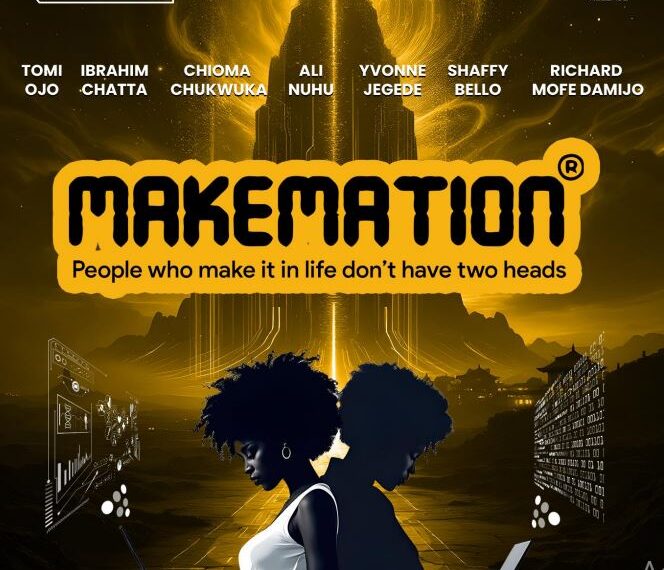
The Nigerian film industry is once again pushing creative boundaries with the release of Makemation, widely described as Africa’s first AI-themed feature film. Since its debut, the film has been generating discussions that bridge nostalgia, futuristic storytelling, and technology culture, positioning Nigeria at the forefront of innovative cinematic experiences.
Makemation isn’t just another addition to Nollywood’s prolific output; it is a cultural experiment. By combining storytelling with artificial intelligence concepts, the film explores how technology intersects with everyday life while also paying homage to early Nigerian tech culture. Audiences have praised the movie for invoking a sense of nostalgia through subtle callbacks to classic Nollywood aesthetics, music, and visual cues all while delivering a forward-looking narrative centered on AI and its societal impact.
Critics and viewers alike note that Makemation represents a new era in African filmmaking, where technology is not merely a backdrop but a central character influencing the plot. By weaving AI into its storylines, the film invites audiences to reflect on how emerging technologies are shaping work, creativity, and social interaction. It also encourages debates on ethical considerations, privacy, and the evolving relationship between humans and machines.
The film’s release has sparked lively discussions across social media platforms, with younger audiences excited about the tech integration, while older viewers appreciate the nostalgic references to early digital culture and Nollywood tropes. This cross-generational appeal highlights the film’s ability to connect diverse audiences through a shared exploration of the past and future of technology in Africa.
Makemation’s production itself reflects Nigeria’s growing technical capabilities in film. Advanced visual effects, AI-assisted animation techniques, and innovative sound design have been leveraged to create immersive sequences that resonate with both local and global audiences. Such experimentation demonstrates that Nigerian filmmakers are increasingly willing to embrace technology to expand storytelling possibilities, rather than relying solely on traditional methods.
Beyond its entertainment value, Makemation serves as a conversation starter. It challenges both creators and viewers to consider the role of technology in shaping narratives, cultural memory, and creative industries across Africa. As discussions continue online and in film forums, the movie is fostering a unique space where art, technology, and culture converge a space that has been largely unexplored in African cinema until now.
In conclusion, Makemation is more than just a film; it’s a cultural statement. By blending nostalgia with AI-driven storytelling, it represents a bold step forward for Nollywood and African cinema as a whole. As audiences engage with its themes and techniques, Makemation cements its place as a landmark in the evolution of African storytelling one that marries the past, present, and future in compelling ways.

Leave a Reply