
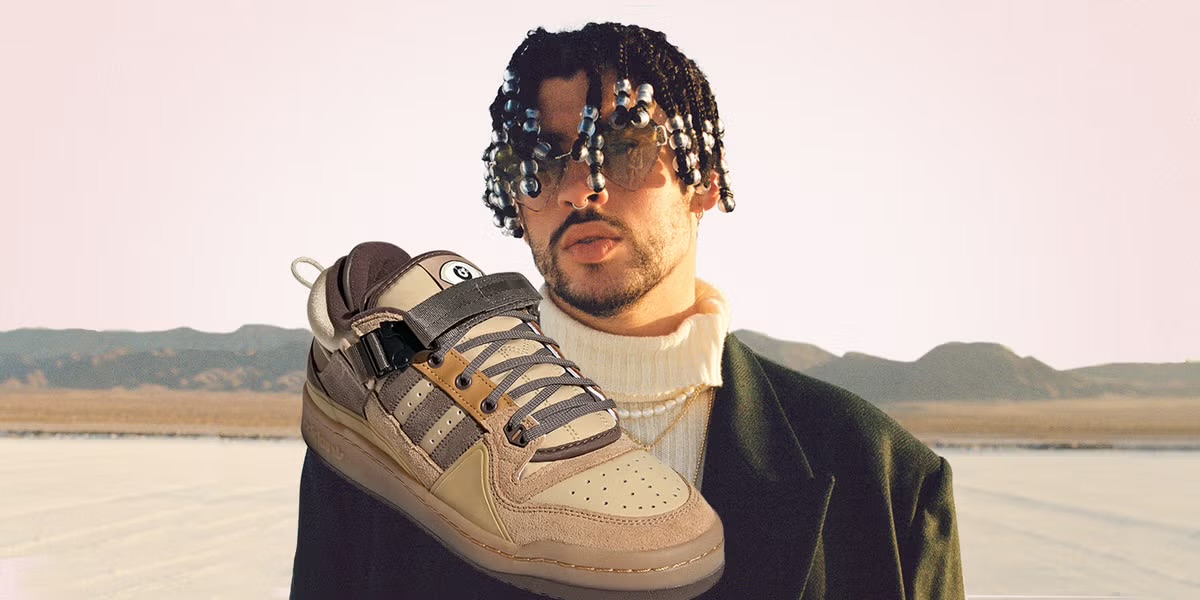
Bad Bunny isn’t just moving music anymore, he’s moving product at a pace most brands can’t keep up with.
His latest collaboration with adidas, the BadBo 1.0, has quickly become one of the most in-demand sneakers of 2026, with early releases selling out in mere minutes after dropping online.
The rollout has been calculated and explosive. The first drop, a hyper-limited run of just 1,994 pairs, a nod to his birth year created immediate scarcity and hype, setting the tone for everything that followed. Subsequent releases only amplified demand, with even wider drops disappearing almost instantly and resale markets heating up within hours.
Part of the frenzy can be traced back to timing. Bad Bunny unveiled the sneaker on one of the biggest stages in the world the 2026 Super Bowl halftime show turning a performance moment into a global fashion statement overnight. What followed was predictable but still staggering: a surge in demand, search spikes, and a fanbase ready to buy on sight.
And this isn’t new territory for him.
Bad Bunny’s adidas collaborations have consistently followed the same pattern limited supply, cultural timing, and immediate sellouts. The BadBo 1.0 simply takes it further, marking his first true signature sneaker, not just a reinterpretation of existing silhouettes.
What makes this moment different is what it represents. This isn’t just hype culture, it’s influence at scale. Bad Bunny has reached a point where:
- A sneaker debut during a performance becomes a global retail event
- Limited drops turn into instant sellouts
- And each release feels less like merch, more like cultural currency
In today’s market, where celebrity collaborations are everywhere, very few artists can still guarantee that kind of reaction.
Bad Bunny can.
And with every drop that disappears in minutes, he’s not just selling sneakers, he’s redefining what artist-brand partnerships look like in real time.