
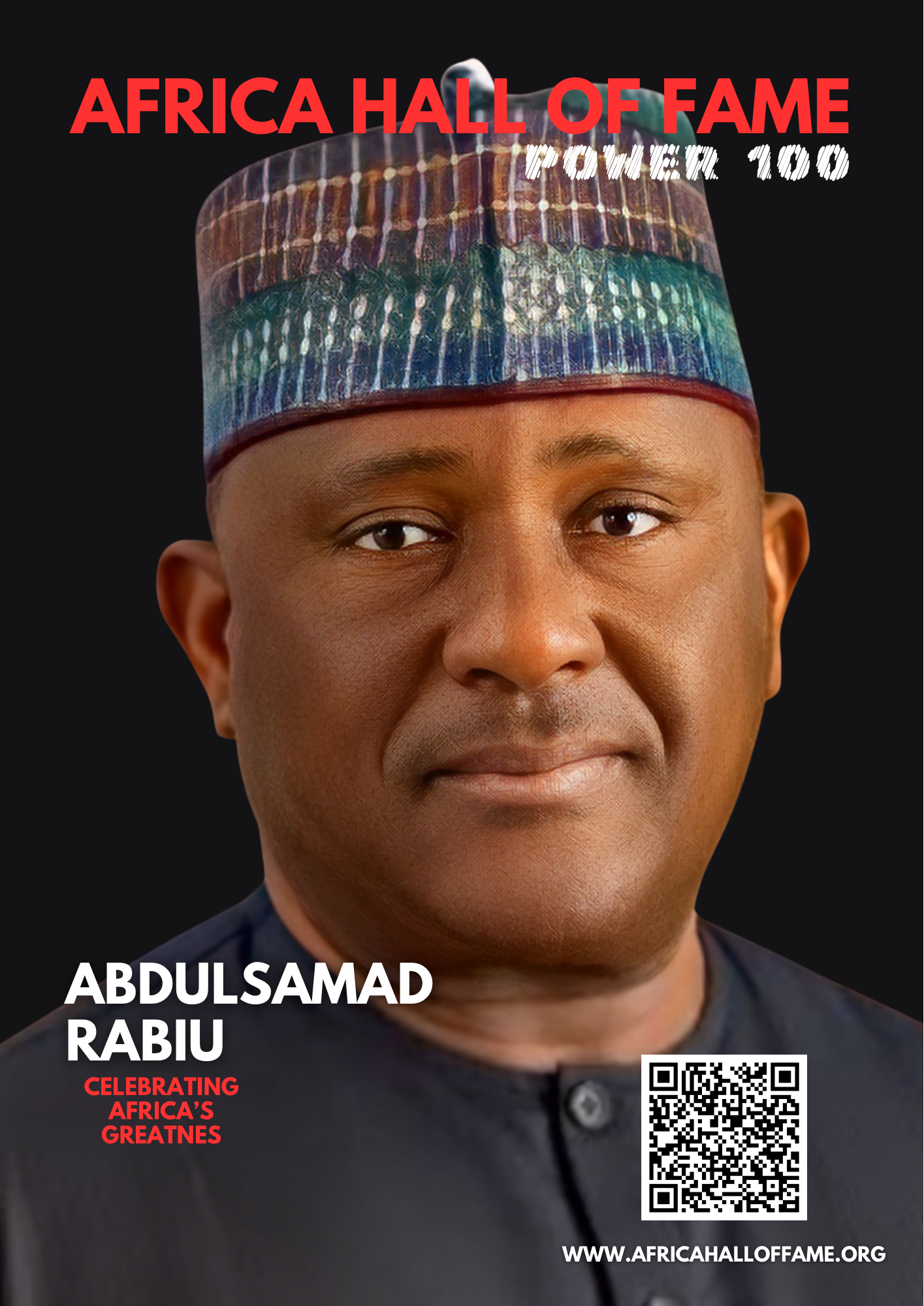
Africa Hall of Fame: Power 100
Abdulsamad Rabiu: The Power of Industrial Scale and Nation-Building
A Different Kind of Power
Abdulsamad Rabiu represents a form of power grounded in physical transformation—cement, infrastructure, and the materials that quite literally build nations. His influence is not abstract or symbolic; it is embedded in roads, bridges, cities, and the expanding skylines of Africa.
In a world where digital innovation often dominates attention, Rabiu’s strength lies in the fundamentals of development. Infrastructure remains the backbone of economic growth, and cement is one of its most essential components. By controlling its production and supply, Rabiu operates at the foundation of national progress.
His power is visible in every structure that rises, every project that connects, and every economy that expands through construction.
Building an Industrial Empire
At the centre of Rabiu’s influence is BUA Group, the diversified conglomerate he built into one of Africa’s leading industrial platforms. Through BUA, Rabiu has established a dominant presence in cement, sugar, and infrastructure-related industries.
His flagship cement business, BUA Cement, has grown into one of the largest producers in Nigeria, supplying millions of tonnes annually to support construction and development.
Cement is a sector defined by scale, logistics, and capital intensity. It requires massive investment, efficient distribution networks, and the ability to operate in challenging environments. Rabiu has built his empire by mastering these elements—expanding production capacity while maintaining cost competitiveness.
By doing so, he has positioned himself at the heart of one of Africa’s most critical industries: the business of building.
The Power of Infrastructure and Supply
What distinguishes Rabiu is his focus on supply—ensuring that essential materials are available at scale and at competitive prices. In many African markets, the cost and availability of cement directly affect the pace of development.
By increasing local production and reducing reliance on imports, Rabiu has played a role in shaping national infrastructure trajectories. His businesses contribute to housing, transportation, and industrial projects, all of which are fundamental to economic growth.
Infrastructure is one of the most powerful drivers of transformation. It enables trade, supports urbanisation, and unlocks productivity. By supplying the materials that make it possible, Rabiu operates at a level where business intersects directly with national development.
His influence is therefore not only commercial, but structural—impacting how countries grow and modernise.
Strategic Expansion and Market Positioning
Rabiu’s rise has been defined by strategic expansion and disciplined execution. Rather than diversifying widely, he has concentrated on sectors where scale creates advantage—cement, sugar, and industrial production.
This focus has allowed him to build efficiency and competitiveness, particularly in environments where infrastructure and logistics present challenges. His ability to navigate these complexities has strengthened his position within highly demanding industries.
Unlike volatile sectors driven by trends, Rabiu’s businesses are anchored in consistent demand. Construction, population growth, and urban development ensure that cement remains a long-term necessity.
This creates a foundation of stability and relevance, reinforcing the durability of his influence.
National Impact, Continental Potential
Rabiu’s success is deeply rooted in Nigeria, one of Africa’s largest and fastest-growing economies. By building industrial capacity locally, he has contributed to reducing import dependence and strengthening domestic production.
His businesses play a role in national self-sufficiency—an increasingly important factor in global economic strategy. In doing so, he aligns commercial success with broader economic priorities.
At the same time, his model has continental relevance. As Africa continues to urbanise, the demand for infrastructure will only increase. This positions Rabiu’s approach—large-scale, locally anchored production—as a blueprint for growth across the continent.
His influence, while nationally concentrated, has implications that extend far beyond a single market.
Influence Beyond Business
Rabiu’s impact extends into philanthropy and public development. Through the Abdul Samad Rabiu Africa Initiative, he has committed substantial resources to health, education, and social infrastructure across Africa.
His foundation has supported hospitals, universities, and public institutions, reinforcing the link between economic success and societal development.
This approach reflects a broader philosophy: that industrial wealth should contribute to national progress. By investing in both physical and social infrastructure, Rabiu extends his influence beyond the private sector.
His role is not only to build businesses, but to support the systems that sustain growth.
A Model of Industrial Wealth
Rabiu represents a model of wealth built on production, scale, and long-term demand. His success is not driven by speculation or rapid disruption, but by the steady expansion of industries that underpin economies.
In an era where many fortunes are created in intangible sectors, Rabiu’s empire is grounded in tangible output. Cement, sugar, and infrastructure are essential, enduring, and resistant to obsolescence.
This resilience is a defining feature of his power—ensuring that his businesses remain relevant across economic cycles.
Defining Power Through Nation-Building
The Africa Hall of Fame: Power 100 recognises individuals whose influence shapes economies and societies. Rabiu embodies this principle.
His materials build cities. His industries drive development. His investments support national growth.
He represents a form of power that is fundamental—transforming raw materials into the structures that define modern life.
For this reason, his place in the Africa Hall of Fame: Power 100 is not only deserved, it is essential.
He is not just one of Africa’s wealthiest industrialists.
He is one of the builders of its future.