Africa Hall of Fame: Power 100
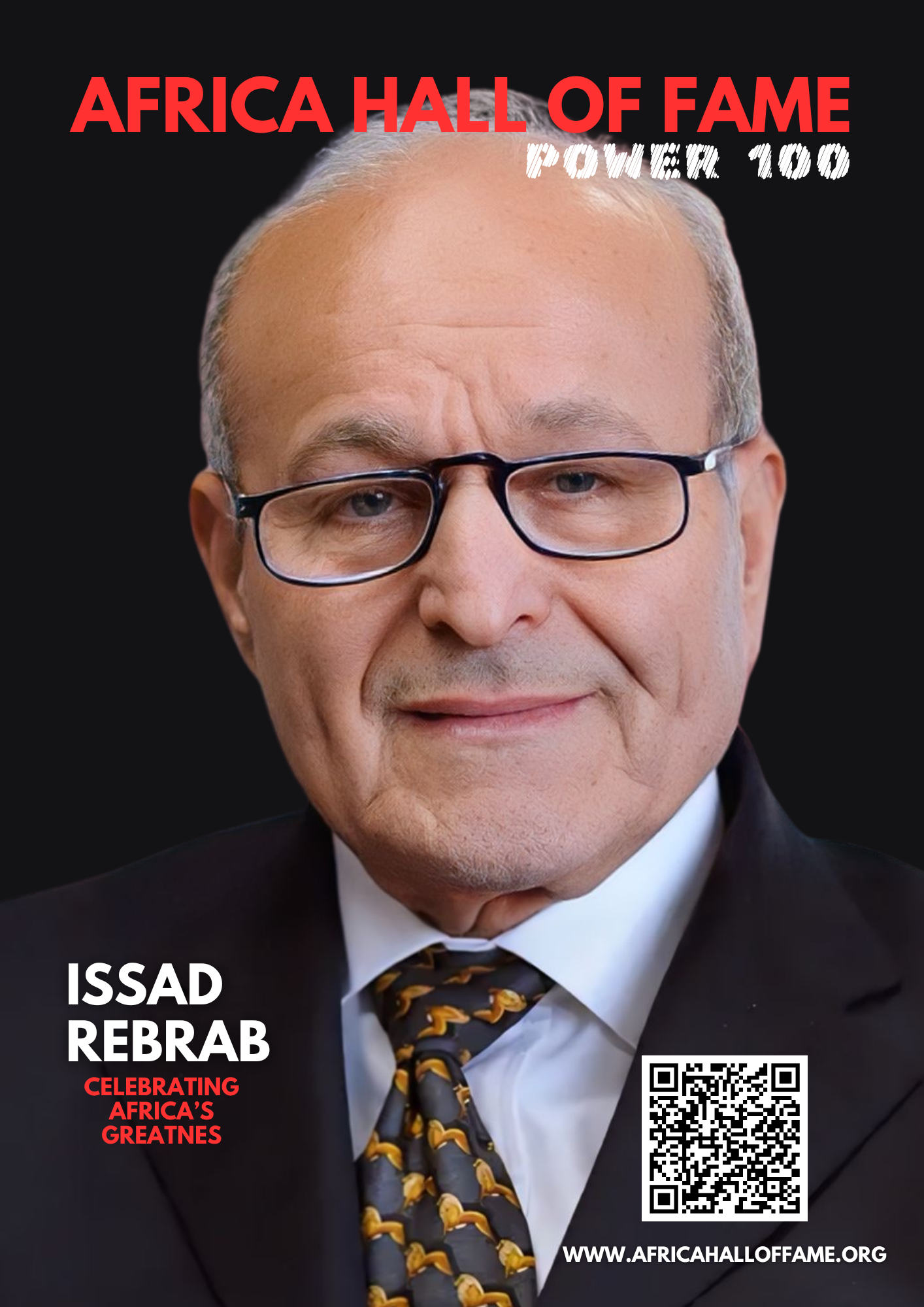
Issad Rebrab: The Power of Industrial Transformation
A Different Kind of Power
Issad Rebrab represents a form of power rooted in production—manufacturing, processing, and industrial capacity. His influence is not built on extraction or finance, but on transformation: turning raw materials into finished goods at scale.
In an era where many economies depend on imports, manufacturing is a decisive force. It determines whether nations produce or consume, export or depend. Rebrab’s strength lies in building systems that shift this balance—creating value within Africa rather than outside it.
His power is grounded in industry—the ability to produce, refine, and distribute essential goods across markets.
Building an Industrial Giant
At the centre of Rebrab’s influence is Cevital, the largest private conglomerate in Algeria and one of the most significant industrial groups in Africa.
Through Cevital, Rebrab has built a diversified manufacturing empire spanning food processing, steel, glass, and consumer goods. One of its flagship operations is one of the world’s largest sugar refineries, supplying both domestic and international markets.
Manufacturing at this scale requires more than capital—it demands logistics, supply chain mastery, and operational efficiency. Rebrab has developed an integrated system that connects raw materials, processing facilities, and distribution networks.
By doing so, he has positioned himself at the core of Algeria’s industrial economy.
The Power of Production and Value Creation
What distinguishes Rebrab is his focus on value creation. Rather than exporting raw materials, his businesses process and manufacture goods locally, increasing their economic worth before they reach the market.
This approach has profound implications. It creates jobs, strengthens domestic industries, and reduces reliance on imports. In many African economies, industrialisation remains a critical challenge—and Rebrab’s model offers a pathway forward.
Manufacturing is one of the most powerful drivers of economic development. It multiplies value, supports supply chains, and builds resilience. By controlling these processes, Rebrab operates at a level where business directly shapes national capability.
His influence is therefore structural—embedded in the productive capacity of the economy.
Strategic Expansion and Industrial Vision
Rebrab’s rise has been defined by long-term vision and strategic expansion. He has invested heavily in large-scale industrial projects, often in sectors that require patience and significant capital.
His ambitions have extended beyond Algeria into Europe and other international markets, reflecting a global outlook. By acquiring and developing industrial assets abroad, he has connected African production with global demand.
This positioning allows him to operate across borders, balancing domestic strength with international reach.
Unlike short-term ventures, manufacturing is built over decades. Rebrab’s strategy reflects this reality—focusing on durable assets that generate sustained value.
National Impact, Global Potential
Rebrab’s influence is deeply rooted in Algeria, where his businesses play a critical role in industrial development. By building large-scale production facilities, he has contributed to economic diversification in a country historically reliant on hydrocarbons.
His work demonstrates the importance of private enterprise in driving industrial growth. In economies seeking to reduce dependence on natural resources, manufacturing provides a path toward stability and self-sufficiency.
At the same time, his international investments position him within global supply chains, linking African industry to broader markets.
This dual focus—local production and global integration—strengthens both his businesses and his influence.
Influence Beyond Business
Rebrab’s impact extends beyond industry into broader economic and social spheres. As one of Algeria’s most prominent private-sector figures, he has played a role in shaping discussions around economic reform, industrial policy, and development.
His success represents a shift toward private entrepreneurship in a landscape historically dominated by state-owned enterprises. In doing so, he has helped redefine the role of business in Algeria’s economy.
While his influence has not been without challenges, it underscores the complexity of building large-scale industry in emerging markets.
His presence continues to shape conversations about the future of manufacturing in Africa.
A Model of Industrial Wealth
Rebrab represents a model of wealth built on production, scale, and long-term investment. His empire is grounded in factories, processing plants, and supply chains—assets that generate real economic output.
In a world increasingly driven by consumption, manufacturing remains the engine that sustains it. By focusing on production, Rebrab has positioned himself within one of the most fundamental pillars of economic power.
His approach is not driven by rapid change, but by steady expansion—building systems that endure.
This resilience is a defining feature of his influence.
Defining Power Through Industry
The Africa Hall of Fame: Power 100 recognises individuals whose impact shapes economies at their core. Rebrab embodies this principle.
His factories produce essential goods. His systems create value. His vision drives industrial growth.
He represents a form of power that transforms economies—moving them from dependence to production, from importation to creation.
For this reason, his place in the Africa Hall of Fame: Power 100 is not only justified, it is essential.
He is not just one of Africa’s leading industrialists.
He is one of the builders of its manufacturing future.