
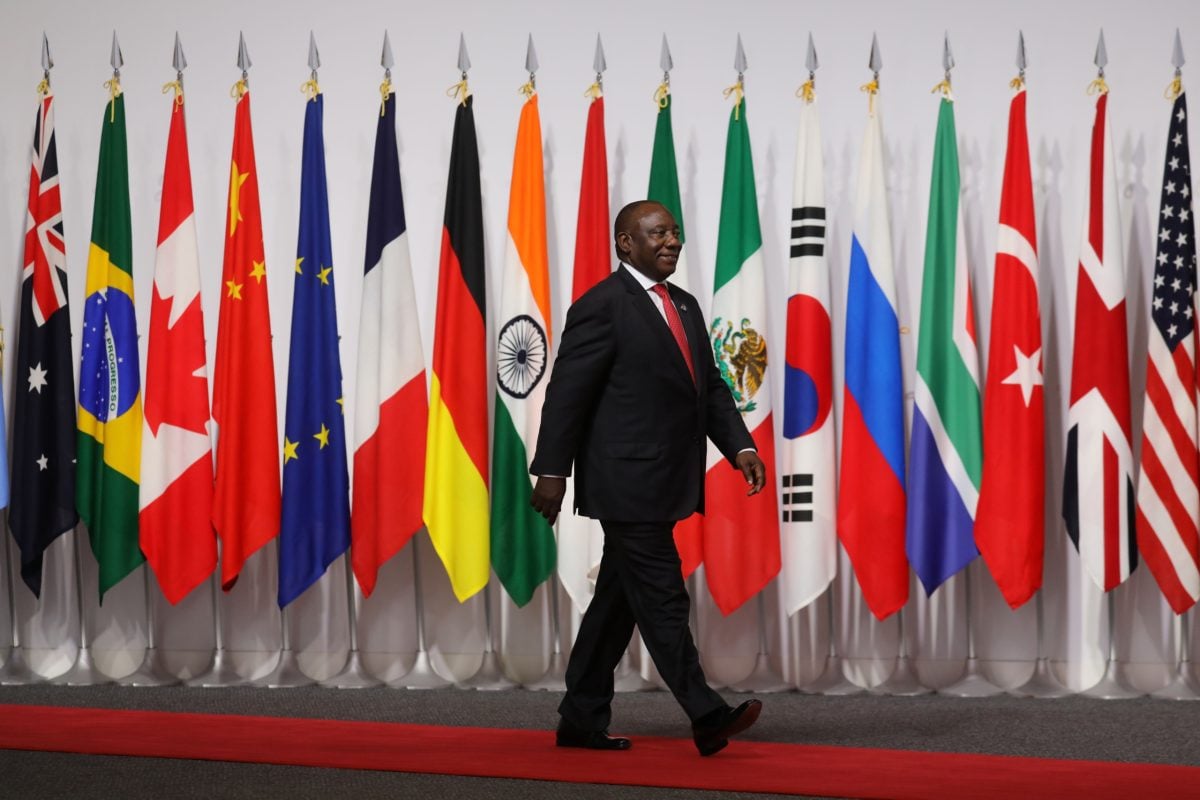
For the first time in history, Africa has taken the helm of the G20 — a milestone moment offering the continent a platform to reshape conversations about global economic governance. South Africa’s presidency arrives at a period of intense geopolitical volatility, mounting trade frictions, and a rapidly fragmenting multilateral order.
As the first African nation to chair the forum of the world’s largest economies, South Africa is using its position to champion the priorities of the Global South — from reforming the international financial system to driving debt sustainability, climate resilience, and inclusive growth.
Its chosen theme, “Solidarity, Equality and Sustainability,” reflects an ambition to promote a more people-centred and development-driven future, working in partnership with other G20 members throughout its presidency.
A Bridge Between Worlds
South Africa occupies a unique place in the global landscape — a BRICS+ member that maintains deep trade and investment links with Western economies. That dual position allows Pretoria to serve as a bridge between developed and developing nations, pushing for a more balanced and equitable global order.
Demographics further underline the strategic weight of this presidency. The United Nations projects that by 2050, one in four people on Earth will live in Africa, a figure expected to rise to 40% by the end of the century. Moreover, the continent will contribute 85% of the growth in the global working-age population over the next quarter-century.
Against this backdrop, the G20 under South Africa’s stewardship represents not just a diplomatic milestone but an inflection point — an opportunity to articulate a new African-led economic and geopolitical vision for the world.
Reinventing the G20
This African presidency also coincides with the G20’s own search for renewed purpose. Created in 1999 to tackle financial crises, the group — comprising 19 nations plus the European Union and, now, the African Union — has evolved into the leading platform for addressing global challenges ranging from economic stability to climate change and digital transformation.
Yet, in a world increasingly defined by great-power rivalries and the erosion of multilateralism, the G20 faces the challenge of maintaining relevance. Many members now navigate a complex web of competing alliances and regional tensions, making consensus harder to reach.
Recent presidencies — Indonesia in 2022, India in 2023, and Brazil in 2024 — have nudged the forum toward a more developmental agenda. South Africa has now built on that foundation, embedding African priorities and systemic reforms into the G20’s evolving mission.
Building a Lasting Legacy
Pretoria’s leadership is not merely symbolic. It has proposed a suite of legacy initiatives designed to outlive its term:
-
The Africa Engagement Framework (2026–2030): A long-term mechanism to ensure African economic and financial priorities remain integral to the G20 agenda. It focuses on infrastructure development, capital mobilisation, macroeconomic stability, and institutional strengthening.
-
The Ubuntu Legacy Initiative: Developed in partnership with the African Development Bank, this framework seeks to fast-track cross-border infrastructure projects across the continent.
-
The Africa Energy Efficiency Facility: A $3 billion platform to finance green energy projects, harmonise energy policies, and enhance technical capacity across African states by 2030.
In another groundbreaking move, South Africa has convened the Extraordinary Committee of Independent Experts, chaired by Nobel laureate Joseph Stiglitz, to produce the G20’s first-ever report on global inequality — a landmark study assessing how wealth disparity affects growth, poverty, and global stability.
Committee member Professor Jayati Ghosh of the University of Massachusetts Amherst underscored the urgency: “The world needs new, evidence-based strategies for tackling inequality — not outdated orthodoxies that perpetuate the same cycles of exclusion.”
Focus Amid Complexity
South African Reserve Bank Governor Lesetja Kganyago has cautioned against an overloaded G20 agenda, urging sharper focus on long-term, multi-year economic initiatives. “The G20 functions best in moments of crisis,” he said. “But as the world shifts from emergency to evolution, the challenge is to retain that sense of purpose without losing coherence.”
A Defining Moment for the Global South
Observers say South Africa’s presidency could redefine the G20’s relationship with the Global South. As Elizabeth Sidiropoulos, CEO of the South African Institute of International Affairs, wrote:
“While unanimity may remain elusive, tangible progress on shared priorities is vital if the G20 is to stay relevant — not for its own survival, but for the integrity of the multilateral system itself.”
She added that the current global turbulence demands bold leadership and meaningful action capable of rebuilding trust — both between nations and between citizens and their governments.
For Africa, this moment is more than diplomatic symbolism. It represents a claim to influence — and a vision for a more just and balanced global future.

Leave a Reply