
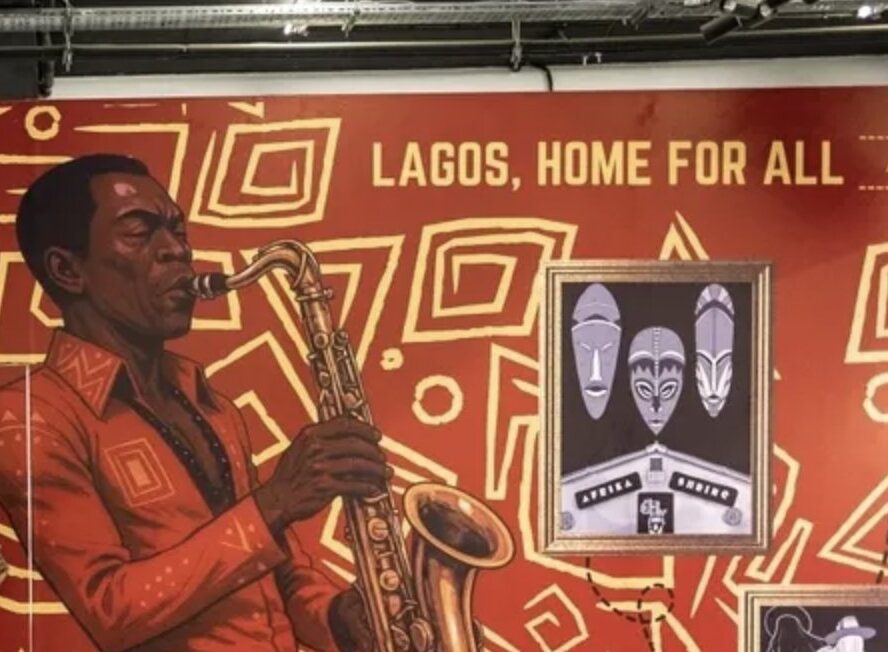
In Lagos this week, the air feels charged not just with rhythm, but with remembrance. A new exhibition celebrating the life and influence of Fela Anikulapo Kuti has opened in Nigeria’s cultural capital, bringing together over 440 carefully curated items that trace the revolutionary musician’s journey from man to myth.
Hosted in collaboration with the Kalakuta Museum and the Fela Kuti Estate, the exhibition isn’t just a display of history it’s a living, breathing experience. From faded photographs of smoky stage performances to vibrant paintings, handwritten notes, and never-before-seen videos, it’s an immersive walk through the heartbeat of Afrobeat’s creator.
But what makes this exhibition remarkable isn’t just its size it’s its soul. Every corner hums with the energy that defined Fela: rebellion, rhythm, and radical truth.
A Shrine Reimagined
To walk into the exhibition is to step into a time machine that never stands still. The first thing you see is the saxophone Fela’s weapon of choice. Then the iconic stage outfits: flowing Ankara, military-inspired tunics, the infamous “pant” ensembles that symbolized both defiance and liberation.
These aren’t just artifacts; they are instruments of identity. Nearby, walls lined with photographs capture Fela in moments of performance, protest, and play sweating under stage lights, laughing with the Kalakuta Queens, or staring down authority with that unshakable mix of fire and calm.
Curators describe the show as “a celebration of resistance through rhythm.” It’s not just about what Fela did it’s about why he did it. His music, art, and activism are presented not as relics, but as reminders that speaking truth to power is a form of art in itself.
440 Stories, One Revolution
The number 440 might seem arbitrary, but it reflects the vastness of Fela’s world every object, from stage gear to handwritten song drafts, feels like a portal. Visitors move between sections themed around his evolution: “The Rebel,” “The Healer,” “The Visionary.”
Among the standout exhibits:
-
A rare notebook containing early lyrics for “Zombie” and “Water No Get Enemy.”
-
Original posters from performances at The Shrine in the 1970s.
-
Artwork from contemporary Nigerian painters inspired by his music and message.
-
Interactive video installations showing archival footage of protests and concerts raw, unfiltered energy that still stirs the crowd decades later.
These items tell stories of courage and consequence. They remind us that Fela wasn’t just making music; he was making movement.
Beyond Nostalgia: The Music Lives
The exhibition doesn’t end in silence. Every evening, live performances by Nigerian artists reinterpret Fela’s sound bridging generations through beat and brass. Young performers like Made Kuti, Femi Kuti, and other rising Afrobeat-inspired acts take turns breathing new life into the classics, their sounds spilling into the night air like an unending jam session.
This decision to pair visual art with live performance feels deliberate, a reminder that Afrobeat was never meant for museums. It was built for movement, for sweat, for the communion between sound and struggle.
Standing in that space, you realize the exhibition isn’t an archive. It’s a resurrection.
Fela’s Lagos: Then and Now
Few artists are as inseparable from a city as Fela is from Lagos. His Kalakuta Republic wasn’t just a home; it was a political statement, a space where music and activism merged. Today, Lagos with its constant buzz of traffic, creativity, and contradiction remains the perfect backdrop for his story.
The exhibition’s location near cultural landmarks feels symbolic. Lagos has changed, it’s shinier, taller, more digital but the spirit of protest and creativity still thrives. From the rhythms of Afrobeats to the voices of artists speaking truth in their songs, Fela’s DNA runs through the veins of Nigerian pop culture.
You see it in the self-assuredness of Burna Boy, the social commentary of Falz, the genre-defying experiments of artists like Asake and Odumodublvck. They might not play the sax, but they carry the torch.
A Legacy That Refuses to Fade
What’s most powerful about the Fela Kuti exhibition isn’t nostalgia. it’s continuity. It shows that even decades after his passing, Fela’s message feels urgent. The questions he asked about power, poverty, justice, and freedom still echo across the continent.
And perhaps that’s why this exhibition matters so deeply. It’s not just remembering an artist; it’s remembering a responsibility. For Fela, art was never entertainment alone. It was education. It was confrontation. It was truth.
Every visitor leaves reminded that music can be more than melody it can be medicine.
Why This Exhibition Matters Now
In an era where global audiences are rediscovering Afrobeat and its offshoots from Afrobeats to amapiano revisiting Fela’s roots feels timely. His global influence has become undeniable: sampled by Beyoncé, cited by Jay-Z, studied in universities from Lagos to London. Yet at home, this exhibition brings him back to where it began, the soil that shaped his sound and his stance.
In today’s Nigeria, where young creatives are pushing boundaries in art, fashion, and music, Fela’s legacy feels both familiar and prophetic. He showed that rebellion and beauty can coexist, that you can dance and dissent at the same time.
This exhibition, ultimately, is not a goodbye. It’s an invitation to remember, to reflect, and to reignite

Leave a Reply