
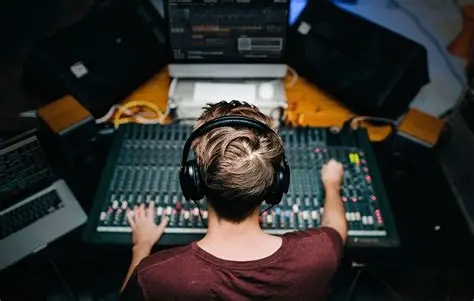
Once upon a time, music creation meant hours in the studio sweat, mistakes, and magic. Now, with the click of a button, artificial intelligence can mix, master, and even compose songs. The music industry has always evolved with technology from vinyl to streaming but AI feels different. It’s not just changing the tools; it’s changing the soul of music itself.
In 2025, we’re watching the studio turn into software. AI doesn’t just assist producers anymore it collaborates with them. It can write lyrics in seconds, generate harmonies, mimic famous voices, and even predict which melodies are most likely to go viral. For independent artists, it’s liberation. For traditionalists, it’s a quiet kind of apocalypse.
For years, production was about intuition. Producers like Don Jazzy, Sarz, and Pheelz built their identity on sound on feeling. They made choices that no algorithm could replicate: the slightly offbeat snare, the breath before a verse, the rawness that made it human. But now, AI tools can analyze thousands of hits, break them into patterns, and suggest what works best for streaming algorithms. Music is becoming less about what you feel and more about what will perform.
Yet, there’s no denying the power of this shift. AI is democratizing production. A kid in Ibadan or Accra who can’t afford studio time can now mix a track on their phone, master it through AI, and upload it to streaming platforms within hours. Creativity has never been more accessible. It’s beautiful chaos technology putting the tools of creation in everyone’s hands.
Still, accessibility has its price. When everyone can make music, originality becomes the hardest currency. The market is flooded with songs that sound the same because AI is trained to replicate success, not invent it. Every year, the lines between real emotion and engineered sound blur further. What happens when we can’t tell if a voice is human or generated? Do we still connect the same way?
In the Afrobeats world, we’re already feeling the tension. Producers are experimenting with AI plugins that build drum loops or generate chord progressions inspired by amapiano, Fuji, or dancehall. It’s fast, efficient, and often impressive but the risk is that it smooths out the grit that made the sound unique in the first place. Street music, for instance, thrives on imperfection, a rawness AI doesn’t fully understand.
But AI isn’t all threat; it’s also a muse. Some artists are using it not to replace creativity but to expand it. Imagine a producer using AI to generate 100 beat ideas in five minutes, then sculpting the best one by hand. Or artists using voice-cloning tools to harmonize with their younger selves. It’s not about machines taking over it’s about collaboration between instinct and intelligence.
The irony is that AI might force musicians to rediscover their humanity. In a world where software can make perfect songs, imperfection becomes valuable again. Fans might start craving the realness the cracks in a singer’s voice, the live performance that goes offbeat, the emotion a bot can’t fake. We may be heading into a new era where authenticity becomes the ultimate brand.
There’s also the legal storm brewing. Who owns AI-generated music? The person who typed the prompt, the developer who built the model, or the artist whose style it mimicked. The industry hasn’t figured it out, and the chaos is only beginning. But like streaming, autotune, and social media before it, AI will eventually find its balance in music, the question is at what cost.
The truth is, no matter how advanced AI gets, it can’t replace emotion. It can imitate Drake’s flow or Burna Boy’s tone, but it can’t understand heartbreak, joy, or struggle. The human story is still the ingredient no machine can synthesize.
AI isn’t killing music, it’s challenging it. It’s asking musicians: what makes you human? The artists who survive this new era won’t be the ones who resist technology, but those who use it with soul. The future of sound will belong to those who can merge machine precision with human feeling. Because the beat may be artificial, but the heartbeat will always be real.

Leave a Reply