
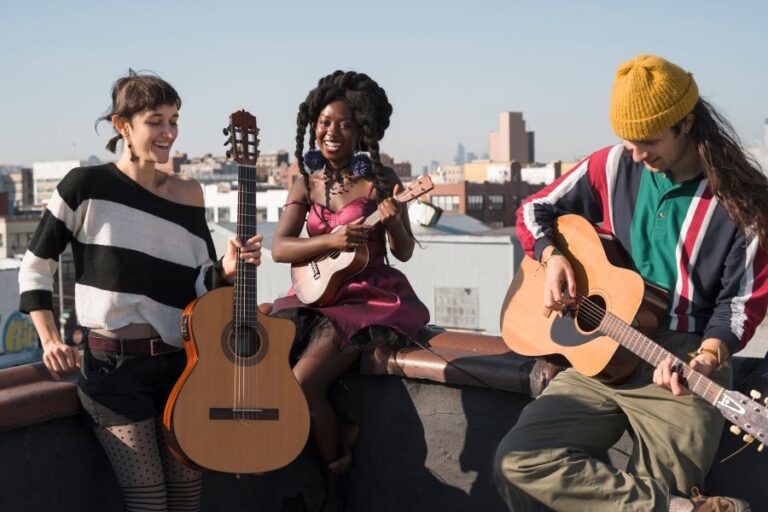
The Effects of Music Globally
Music is one of the few things that belongs to everyone. It crosses language, culture, and class a universal language that connects hearts before words do. From Lagos to London, Seoul to São Paulo, music has become not just a form of entertainment but a force that shapes how people live, think, and relate to the world. In every culture, in every era, music has carried meaning beyond sound it has been a mirror of identity, a tool for change, and a bridge between people who might never meet.
Globally, the effect of music begins with emotion. It reaches places words can’t. A song can comfort someone in grief, energize a protest, or bring joy to a crowd of strangers. Scientists often say music triggers the same parts of the brain linked to memory and emotion and that’s why it feels timeless. The melody of a song can transport us back to moments we thought we’d forgotten. That power gives music an emotional universality that few other art forms can claim. Whether it’s a gospel tune in Nigeria, a ballad in South Korea, or a flamenco rhythm in Spain, the emotional core is the same connection.
Economically, music has become one of the most powerful exports of modern times. Genres like Afrobeats, K-pop, and Latin pop are proof that cultural identity can travel and thrive globally. In the last decade, we’ve seen how artists from different regions have used sound to rewrite narratives about where they come from. Afrobeats, for example, has turned African rhythm into global currency, breaking barriers that once boxed African artists into local fame. Similarly, K-pop turned South Korea into a cultural powerhouse, showing that music can be as influential as technology or politics. These movements prove that sound is not just art, it’s strategy. It sells nations, tells stories, and builds global bridges.
But beyond economy and culture, the social power of music might be its most profound effect. History is full of moments when songs carried movements. Bob Marley turned reggae into a message of peace and unity. Fela Kuti used Afrobeat to fight corruption and oppression. American soul and hip-hop became the soundtracks of civil rights and social awakening. Even now, protest songs and socially conscious music continue to emerge, reminding us that music doesn’t just reflect the world, it challenges it.
In recent years, global connectivity has made music’s reach even more intense. The digital era turned the world into one shared playlist. A teenager in Nairobi can stream a trap beat from Atlanta, remix it with an African groove, and upload it to a global audience overnight. Collaboration has replaced competition. Borders have blurred, and sounds have blended. What used to be local subcultures have now become global movements. The result is a kind of creative cross-pollination that keeps evolving.
Still, this global explosion has its trade-offs. With streaming and algorithmic influence, music has also become faster, shorter, and more disposable. The industry now moves at the speed of a swipe, and songs are often built for virality more than longevity. It’s a reminder that even as music becomes more global, it risks losing some of its intimacy. When everything is made to trend, fewer songs are made to last. But even that shift says something powerful about the time we live in music reflects our pace, our anxieties, and our need for instant connection.
From my perspective, the most beautiful effect of music’s global reach is how it redefines belonging. When you hear Burna Boy in Paris, Bad Bunny in Lagos, or Billie Eilish in Nairobi, it reminds you that we share more than we think. Music has quietly built a global community that transcends politics, religion, and race. It’s one of the few spaces where diversity doesn’t divide it blends. And that blending creates new art, new movements, and new possibilities.
There’s also something spiritual about this universality. Across cultures, music has always carried a sacred quality. From traditional chants to contemporary worship songs, it’s been a language of faith and meaning. Even people who don’t share beliefs can find unity in rhythm. That’s what makes music feel eternal it speaks to the soul’s need to express, to belong, and to heal.
I often think about how one melody can mean different things in different places yet still feel the same. The same heartbreak ballad that moves someone in Mexico can touch someone in Ghana, even if they don’t understand a single lyric. That’s the beauty of sound it transcends translation. It’s proof that emotion is the real language of the world.
As music continues to travel and evolve, its effects will only deepen. It’s no longer confined to radio charts or regional fame; it’s shaping economies, influencing fashion, redefining youth culture, and even shifting diplomacy. Governments now invest in creative industries because they understand that music is soft power it tells the world who you are, without saying a word.
In the end, the effect of music globally is simple but profound: it reminds us of our shared humanity. It gives people from different corners of the world a common rhythm to move to. It builds empathy, joy, and unity in ways speeches and borders can’t. Whether you’re humming a local tune in the chaos of Lagos traffic or vibing to a playlist in a New York subway, music is doing what it has always done connecting us, one beat at a time.



Leave a Reply