
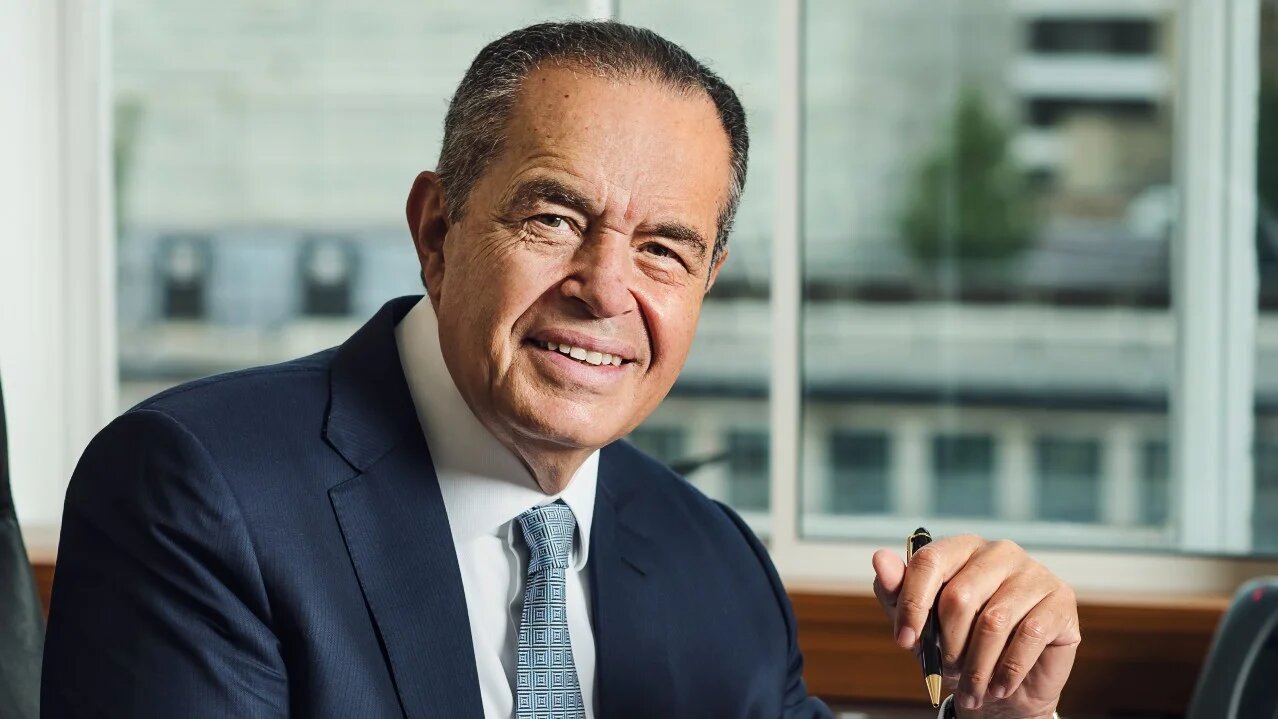
AFRICA’S MONEY LIST 25 — The Architects of Economic Power
Mohamed Mansour
: The Architecture of Diversified State-Linked Capital
In the upper structure of African and Middle Eastern wealth, there exists a category of capital that is not defined by a single industry or flagship empire, but by strategic positioning across sectors that sit close to both markets and the state itself. It is a form of wealth built on continuity, diversification, and long-cycle institutional relationships.
Mohamed Mansour belongs to that category.
Where many fortunes are built through concentration in one dominant sector, Mansour’s model reflects a different logic: distributed capital across infrastructure, distribution systems, and regulated industries that shape national economic flow.
Family Capital Before Corporate Expansion
The Mansour family enterprise, anchored through Mansour Group, represents one of the most established private sector networks in Egypt’s modern economic history.
Unlike purely entrepreneurial capital structures, this foundation is built on multi-generational business continuity, where expansion is gradual, structured, and aligned with long-term national economic cycles.
Within this framework, Mohamed Mansour developed a role that extends beyond stewardship into strategic global and domestic capital allocation.
Capital as Sectoral Distribution
A defining feature of Mansour’s influence is his presence across multiple economic layers:
- automotive distribution
- consumer goods and retail systems
- logistics and supply chain infrastructure
- regulated service industries
This is not diversification for visibility.
It is risk distribution across essential economic systems.
By positioning across sectors that underpin daily economic activity, Mansour’s capital becomes structurally embedded within the circulation pathways of national commerce.
The Logic of Controlled Expansion
Unlike high-volatility capital models driven by rapid scaling or aggressive acquisition cycles, Mansour’s approach reflects controlled expansion within stable and strategically regulated environments.
This creates a form of wealth that is:
- less exposed to market shocks
- closely aligned with regulatory frameworks
- deeply integrated into domestic economic infrastructure
In this model, influence is not derived from disruption, but from continuity within essential systems.
Capital at the Intersection of Market and State
A defining characteristic of Mansour’s positioning is proximity to industries that operate at the intersection of:
- government regulation
- consumer demand
- infrastructure dependency
Sectors such as automotive distribution and large-scale retail systems do not function independently of state frameworks—they operate within them.
This places Mansour’s capital within a structurally significant zone:
where private enterprise and national economic policy continuously interact.
Stability as a Form of Power
Unlike capital structures defined by high-frequency expansion or global speculative positioning, Mansour’s influence is anchored in long-term operational stability.
This produces a different kind of economic power:
- predictable revenue systems
- durable institutional relationships
- sustained relevance across economic cycles
In environments where volatility is common, stability itself becomes a competitive advantage.
Position Within Africa’s Money List
Within the framework of Africa’s Money List 25, Mohamed Mansour occupies a distinct classification:
diversified institutional capital embedded in regulated economic systems.
His relevance is not defined by a single dominant industry, but by the strategic distribution of capital across sectors that underpin national economic functionality.
Where others concentrate power vertically, Mansour operates horizontally—across interconnected systems that collectively sustain economic activity.
Conclusion: The Economics of Continuity
The clearest way to understand Mohamed Mansour is through continuity.
He does not rely on disruption-driven capital cycles.
He does not depend on single-sector dominance.
He does not operate through volatility-based expansion.
Instead, his model reflects long-term integration into the structural layers of commerce and infrastructure.
In most economic narratives, power is associated with rapid growth or visible dominance.
In his case, it is associated with endurance, distribution, and systemic alignment.
That distinction places him in a category defined not by disruption, but by durability.
Africa’s economic systems do not experience this influence as sudden transformation.
They experience it as sustained operational continuity across essential sectors.
And in long-cycle capitalism, continuity is often one of the most under appreciated forms of power.