
AFRICA’S MONEY LIST 25 — The Architects of Economic Power
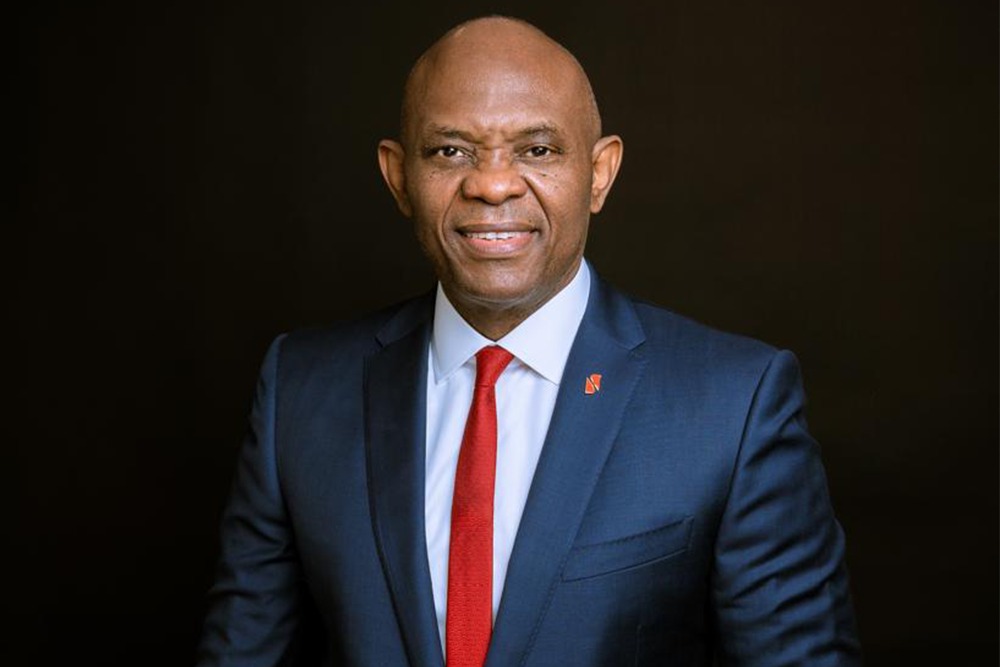
Tony Elumelu
: The Architecture of Systemic Capital Reinvestment
In modern African capitalism, there exists a category of figures whose influence is not defined solely by wealth creation, but by how consistently they recycle capital back into the architecture of the system itself. They do not merely accumulate assets—they reposition ownership, restructure institutions, and rewire access to opportunity.
Tony Elumelu belongs to that category.
Where many fortunes are built through extraction or expansion, Elumelu’s model is defined by a more deliberate logic: reinvestment into institutional control, financial intermediation, and ecosystem formation.
Banking Before Expansion
Elumelu’s foundation was built within Nigeria’s financial sector, particularly through United Bank for Africa.
Banking is not simply a sector within an economy—it is the infrastructure through which every other sector is financed, scaled, and sustained. It determines which ideas become companies, and which companies become institutions.
Within this structure, Elumelu positioned himself not as a participant in capital flows, but as an architect of capital allocation itself.
From Corporate Turnaround to Institutional Builder
A defining phase of Elumelu’s influence came through the transformation of legacy financial institutions into scalable, pan-African platforms.
Rather than remaining within a single national system, he pursued a broader vision: continental financial integration.
This shift reframed banking from domestic intermediation into a cross-border mechanism for:
- trade financing
- SME expansion
- cross-market liquidity
- regional capital mobility
In doing so, Elumelu positioned himself within a deeper layer of economic influence—not just banking systems, but the connectivity between them.
Capital as Ecosystem Formation
Elumelu’s most distinctive contribution extends beyond corporate banking into structured entrepreneurship development through the Tony Elumelu Foundation.
This introduces a different form of capital deployment—one that does not focus on companies directly, but on the conditions under which companies emerge.
Rather than concentrating wealth exclusively at the top of the system, this model distributes catalytic capital at the base:
- seed funding for entrepreneurs
- mentorship and network access
- structured business incubation
- early-stage risk absorption
This creates a feedback loop between capital formation and economic participation.
The Logic of Africapitalism
Elumelu’s philosophy is often framed through Africapitalism—a model that positions private sector development as the primary driver of long-term economic transformation in Africa.
At its core, this is not ideological positioning. It is structural logic:
- markets grow through participation
- participation requires access
- access requires capital distribution mechanisms
In this framework, capital is not merely stored or multiplied. It is circulated strategically to expand the productive base of the economy.
Power Through Distribution
Unlike models that concentrate influence through ownership density, Elumelu’s influence is partially defined by distributed impact.
He operates across multiple layers:
- institutional banking leadership
- entrepreneurial financing ecosystems
- regional investment structures
- policy-adjacent economic dialogue
This creates a form of power that is both centralised in decision-making and decentralised in impact.
Capital as Continuity Engine
A key feature of Elumelu’s model is continuity across economic layers.
Capital is not treated as static wealth. It is treated as:
- renewable input for entrepreneurship
- structural fuel for financial systems
- mechanism for long-term inclusion
This introduces a stabilising effect into the broader ecosystem: rather than isolated wealth accumulation, capital becomes self-reinforcing economic participation.
Position Within Africa’s Money List
Within the framework of Africa’s Money List 25, Tony Elumelu occupies a distinct classification:
systemic reinvestment capital and ecosystem architecture.
His relevance is not limited to the scale of assets controlled, but to the structural reach of capital into both institutions and individuals simultaneously.
Where others optimise capital for consolidation, Elumelu optimises for circulation and regeneration.
Conclusion: The Economics of Access
The clearest way to understand Tony Elumelu is through distributional intent.
He built influence through banking.
He extended it through entrepreneurship systems.
He reinforces it through continuous capital reinvestment into emerging actors.
In most economic narratives, capital flows upward—concentrating as it scales.
In his case, capital is also directed outward—re-entering the base of the system to sustain future growth.
That distinction places him in a category defined not just by accumulation, but by structural reinforcement of participation.
Africa does not experience his influence only through institutions at the top of the financial system.
It experiences it through the constant creation of new entry points into that system.
And over time, systems that continuously renew participation are the ones that endure.