
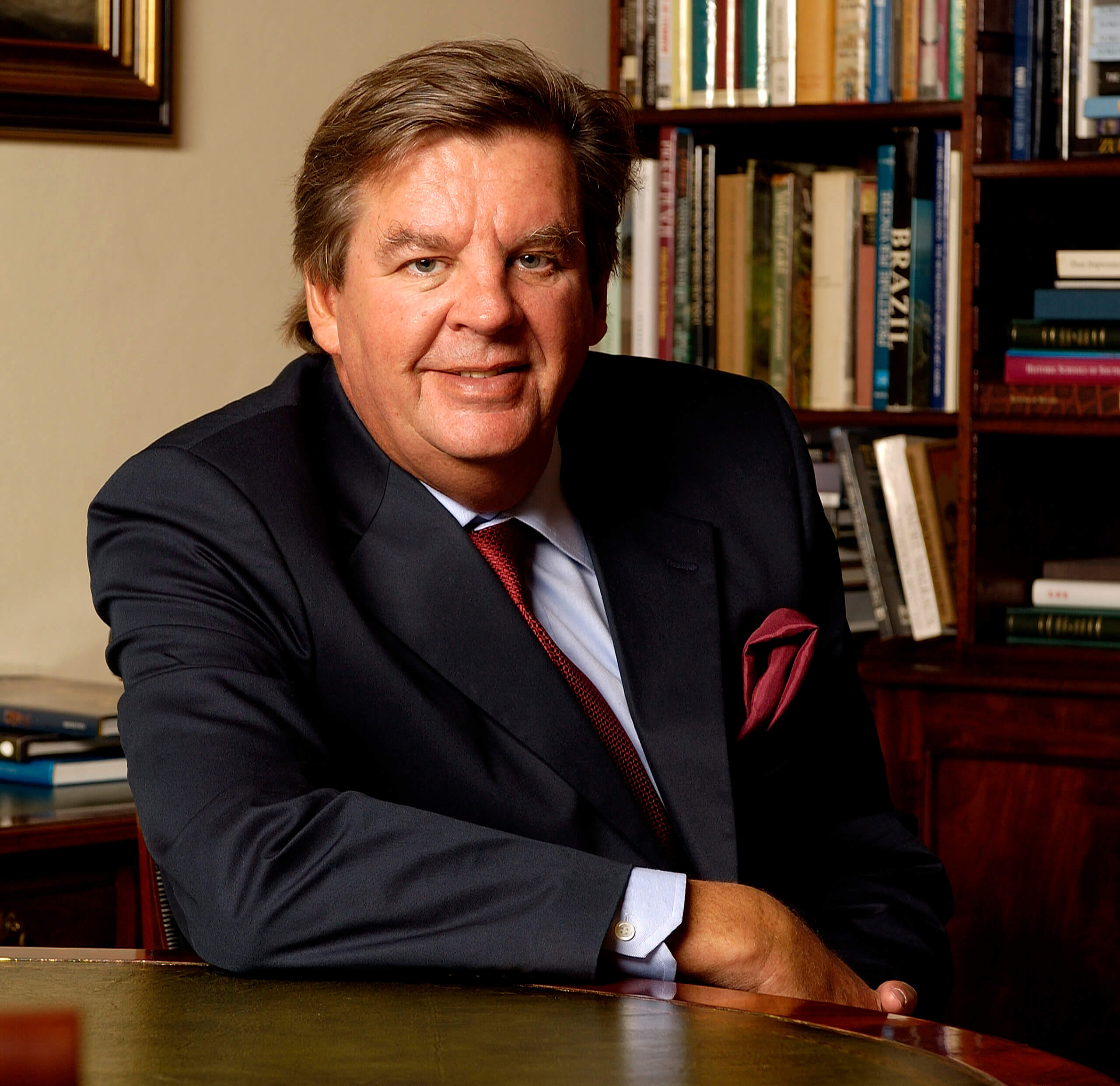
AFRICA’S MONEY LIST 25 — The Architects of Economic Power
Johann Rupert: The Quiet Geometry of Global Luxury Power
In global capitalism, there exists a tier of influence that operates not through volume, but through control of value itself. It is a layer where scarcity is engineered, perception is managed, and pricing power is sustained across generations.
Johann Rupert belongs to that layer.
While many fortunes are built by expanding access—producing more, distributing wider, scaling faster—Rupert’s empire moves in the opposite direction. It refines, restricts, and elevates. His capital does not chase markets. It defines the terms under which markets desire.
Value Before Volume
At the core of Rupert’s influence sits Compagnie Financière Richemont—a portfolio of some of the world’s most recognisable luxury houses, including Cartier, Van Cleef & Arpels, and Montblanc.
These are not merely brands. They are value preservation systems.
Luxury, at this level, is not about consumption. It is about controlled desirability.
Production is limited. Distribution is selective. Expansion is measured.
Where mass-market businesses optimise for scale, Rupert’s model optimises for perception durability—ensuring that what is sold today retains symbolic and financial value tomorrow.
The Economics of Scarcity
Scarcity, in most industries, is a constraint.
In Rupert’s world, it is the product.
The power of Richemont’s portfolio lies in its ability to maintain pricing authority independent of traditional market pressures. Demand does not dictate supply. Supply shapes demand.
This reverses conventional economic logic.
In doing so, Rupert operates in a space where margins are protected not by efficiency, but by meaning—heritage, craftsmanship, and cultural positioning.
It is a model that resists commodification, and therefore resists erosion.
Control Without Noise
Modern wealth often performs itself—through visibility, expansion narratives, and constant signalling. Rupert’s approach is notably different.
His influence is quiet, but deeply embedded within global luxury infrastructure:
- ownership of heritage maisons
- control over brand direction
- long-term stewardship over creative and commercial cycles
He does not dominate headlines.
He dominates categories.
This distinction matters. Visibility fluctuates. Category control endures.
Global Capital, African Origin
Though his empire is global in reach, Rupert’s positioning within Africa’s Money List is significant.
He represents a form of capital that is not confined to the continent, but originates from it while operating at the highest levels of global value chains.
Unlike industrialists whose influence is geographically anchored, Rupert’s operates across:
- Europe (luxury production)
- Asia (high-growth consumption markets)
- North America (capital and distribution networks)
This makes his model less about regional dominance and more about integration into global elite consumption systems.
Capital as Stewardship
One of the defining characteristics of Rupert’s approach is restraint.
Growth is not pursued at the expense of brand dilution.
Acquisitions are not made for scale alone, but for alignment with long-term value preservation.
This introduces a different rhythm of capital:
- slower expansion
- deeper control
- higher resistance to market volatility
In contrast to fast-scaling tech or resource extraction models, his behaves more like a custodial system—protecting and compounding value over decades rather than cycles.
Position Within Africa’s Money List
Within the framework of Africa’s Money List 25, Johann Rupert occupies a distinct classification: luxury sovereignty capital.
His relevance is not derived from controlling essential commodities or financial systems, but from commanding one of the most resilient segments of global capitalism—high-end luxury.
Where others influence how economies function, Rupert influences how value is perceived, priced, and preserved at the highest level.
Conclusion: The Power of Controlled Desire
The clearest way to understand Johann Rupert is through inversion.
He does not scale access—he refines exclusivity.
He does not chase demand—he shapes it.
He does not compete on volume—he dominates on value.
In most economic systems, power is built through expansion.
In his case, it is built through precision.
That distinction places him in a category that is both rare and durable.
Africa does not experience his influence through infrastructure or policy.
It encounters it through global positioning.
And in a world where perception increasingly defines value,
those who control perception sit closer to power than those who simply produce.