
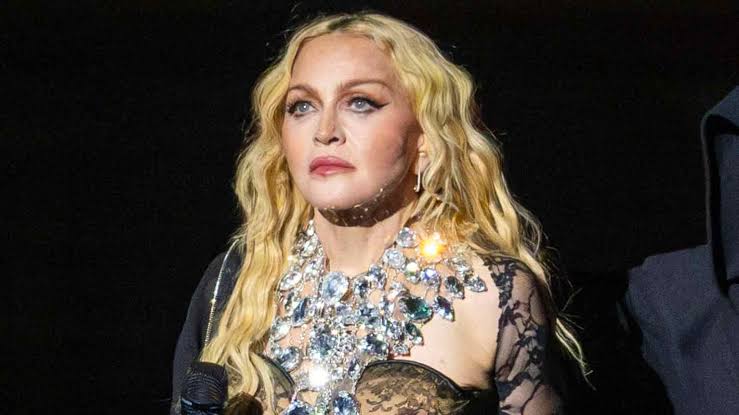
The queen isn’t revisiting the past, she’s reactivating it.
Madonna has officially announced Confessions on a Dance Floor Part II, a sequel to one of the most defining albums of her career and a project that helped reshape modern dance-pop when it first arrived.
This isn’t just nostalgia.
It’s strategy.
The original Confessions on a Dance Floor wasn’t just a commercial success, it was a cultural reset. A seamless, DJ-inspired body of work that embraced disco, electronic music, and club culture at a time when pop was shifting directions. It reestablished Madonna as not just relevant, but ahead.
Now, years later, she’s returning to that world but in a very different landscape.
Dance music has gone global. Club sounds dominate charts. Electronic textures are no longer niche they’re mainstream. In many ways, the sound Madonna leaned into back then has become the foundation of today’s pop ecosystem.
So Part II arrives with a different kind of weight.
It’s not introducing a sound.
It’s reclaiming it.
While full details around the album’s production, collaborators, and release date remain under wraps, expectations are already forming. A return to continuous, mixed-track sequencing. High-energy production built for movement. A blend of nostalgia and modern club influence that bridges eras rather than repeating them.
Because repeating the past has never been Madonna’s style.
Reframing it is.
There’s also a broader cultural angle to this announcement.
Legacy artists often face a choice: evolve into something new or lean into what made them iconic. Madonna has consistently done both using reinvention as a tool rather than a reaction. Confessions on a Dance Floor Part II feels like a moment where those two instincts meet.
A look back with forward intent.
In today’s music economy, where platforms like Spotify and TikTok drive discovery and resurgence simultaneously, a project like this doesn’t just live in one timeline. It connects generations fans who experienced the original in real time, and new listeners discovering that sound through today’s digital loops.
That duality is powerful.
It turns a sequel into a bridge.
And if executed right, it positions Madonna not just as a legacy act revisiting old ground, but as an artist reasserting influence over a sound she helped shape.
Because in a genre built on movement, timing is everything.
And with Confessions on a Dance Floor Part II, Madonna isn’t just stepping back into the club.
She’s reminding everyone who built the floor.