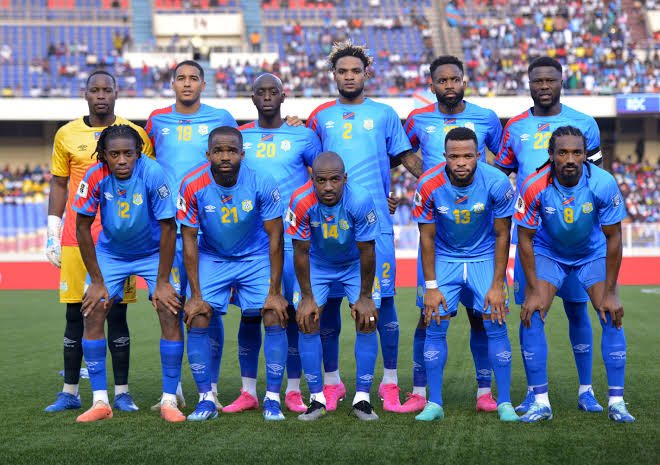
DR Congo’s qualification for the FIFA World Cup after a 52-year absence is more than a dramatic football story, it’s a moment that could reshape perception, investment, and belief around one of Africa’s most under-realized football nations.
The victory over Jamaica, sealed in extra time, carried all the tension you would expect from a game of that magnitude. It was physical, emotional, and stretched to its limits, but the real weight of the moment goes far beyond the final whistle. This is a country that last appeared on the world stage in 1974, when it competed as Zaire. Since then, DR Congo has produced wave after wave of elite talented players who have starred in Europe’s top leagues yet the national team has consistently fallen short of translating that into global tournament presence.
That contradiction is what makes this qualification so significant.
For years, DR Congo has existed as a paradox in African football: a talent powerhouse without the international results to match. This breakthrough suggests a correction is finally happening. It points to improvements not just in player quality which has never really been the issue but in organization, cohesion, and long-term planning. Qualification of this magnitude doesn’t happen by accident; it signals that something structural is beginning to work.
The impact on the country itself will be immediate and deeply emotional. Football has always been a unifying force across African nations, and moments like this transcend sport. In DR Congo, this qualification will ignite national pride, energize youth participation, and reawaken belief in what the national team can represent. For a younger generation that has only heard stories of 1974, this becomes their own reference point a living memory instead of distant history.
Economically and commercially, the ripple effects are just as important. World Cup qualification brings increased visibility, sponsorship opportunities, and potential investment into local football infrastructure. It puts DR Congo back on the global map in a way that club exports alone cannot. Scouts, brands, and media attention follow World Cup teams differently, and that spotlight can accelerate the development of domestic leagues and talent pipelines.
There’s also a broader African context to consider. The continent’s football narrative has often been dominated by a handful of nations Nigeria, Ghana, Cameroon, Senegal, Morocco. DR Congo breaking back into that space adds depth to the competitive landscape. It challenges the hierarchy and reminds everyone that Africa’s talent pool is far wider than the usual contenders.
This matters because global football is shifting. African players are no longer just contributors abroad they are central figures at top clubs and international competitions. As that influence grows, so too does the expectation that more African national teams should reflect that quality on the biggest stage. DR Congo’s return aligns with that shift. It’s a sign that the gap between potential and performance is starting to close.
For the players, this moment changes everything. International tournaments define careers in ways club football sometimes cannot. A strong World Cup showing can elevate profiles, open new opportunities, and solidify legacies. For a squad that has fought through years of inconsistency and pressure, this qualification becomes a platform.
But perhaps the most important impact is psychological.
For decades, DR Congo’s story has been one of “almost.” Almost qualifying. Almost fulfilling potential. Almost matching its talent with results. Breaking that cycle does more than secure a tournament spot, it resets the narrative. It replaces doubt with proof.
Now, the question is no longer whether DR Congo can return to the world stage.
It’s what they do now that they’re back and how far that belief can take them.