
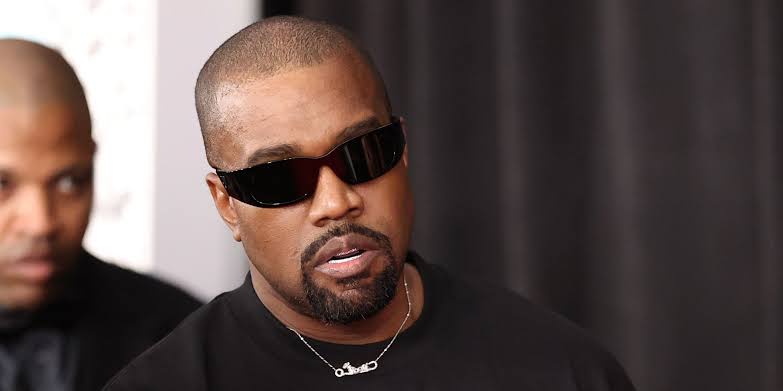
The lights dim, the bass hums, and somewhere between a runway and a stage, a figure stands at the center of it all half musician, half designer, fully architect of a world that didn’t exist before him.
That figure is Kanye West.

From the very beginning, Kanye never moved like an artist confined to one craft. While the industry tried to define him through music, he was already thinking in textures, silhouettes, and color palettes treating sound and style as parts of the same language.
Back then, it looked like distraction. In reality, it was design.
His music didn’t just succeed, it expanded what hip-hop could be. The College Dropout introduced vulnerability, Graduation embraced scale, and My Beautiful Dark Twisted Fantasy turned excess into art. Each project felt like a shift in atmosphere, not just sound.
But even as the music evolved, something else was taking shape.
Fashion didn’t welcome Kanye at first. The industry questioned him, dismissed him, and placed him firmly outside its inner circle. But Kanye approached it the only way he knew how by breaking it down and rebuilding it in his own image.
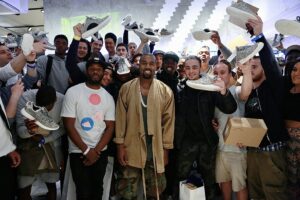
That image became Yeezy.
More than a brand, Yeezy was a redefinition. Kanye stripped fashion back to its bones muted earth tones, oversized fits, worn textures, and silhouettes that felt more like uniforms than statements. It was minimal, but intentional. Raw, but controlled.
Then came the sneakers.
The Yeezy line didn’t just enter the market it shifted it. The Boost 350 blurred the line between performance and lifestyle, making comfort part of the aesthetic. The 700 series challenged conventional beauty, turning bulk and imbalance into desirability. Every drop became an event, driven by scarcity, anticipation, and cultural momentum.
But the real innovation wasn’t just in the product it was in the presentation.
Yeezy shows felt less like fashion and more like installations. Models stood still for hours. The lines between audience and participant blurred. It was uncomfortable, immersive, and impossible to ignore. Kanye wasn’t just showing clothes he was creating environments.
And somewhere in that process, the separation between music and fashion disappeared completely.
Albums started to look like collections. Collections started to feel like albums. A listening party could double as a runway. A fit could signal a new sonic direction. Everything connected.
Kanye wasn’t building products he was building eras.
Even through controversy, reinvention, and unpredictability, one thing has remained consistent: his refusal to operate within boundaries. Where others saw industries, Kanye saw one continuous canvas.
Today, the blueprint is everywhere. Artists launch brands. Sneakers drop like singles. Fashion campaigns feel like album rollouts. The culture has caught up to an idea Kanye was chasing years ago.
He didn’t just enter music and fashion.
He fused them, then built a world where they could no longer exist apart.