
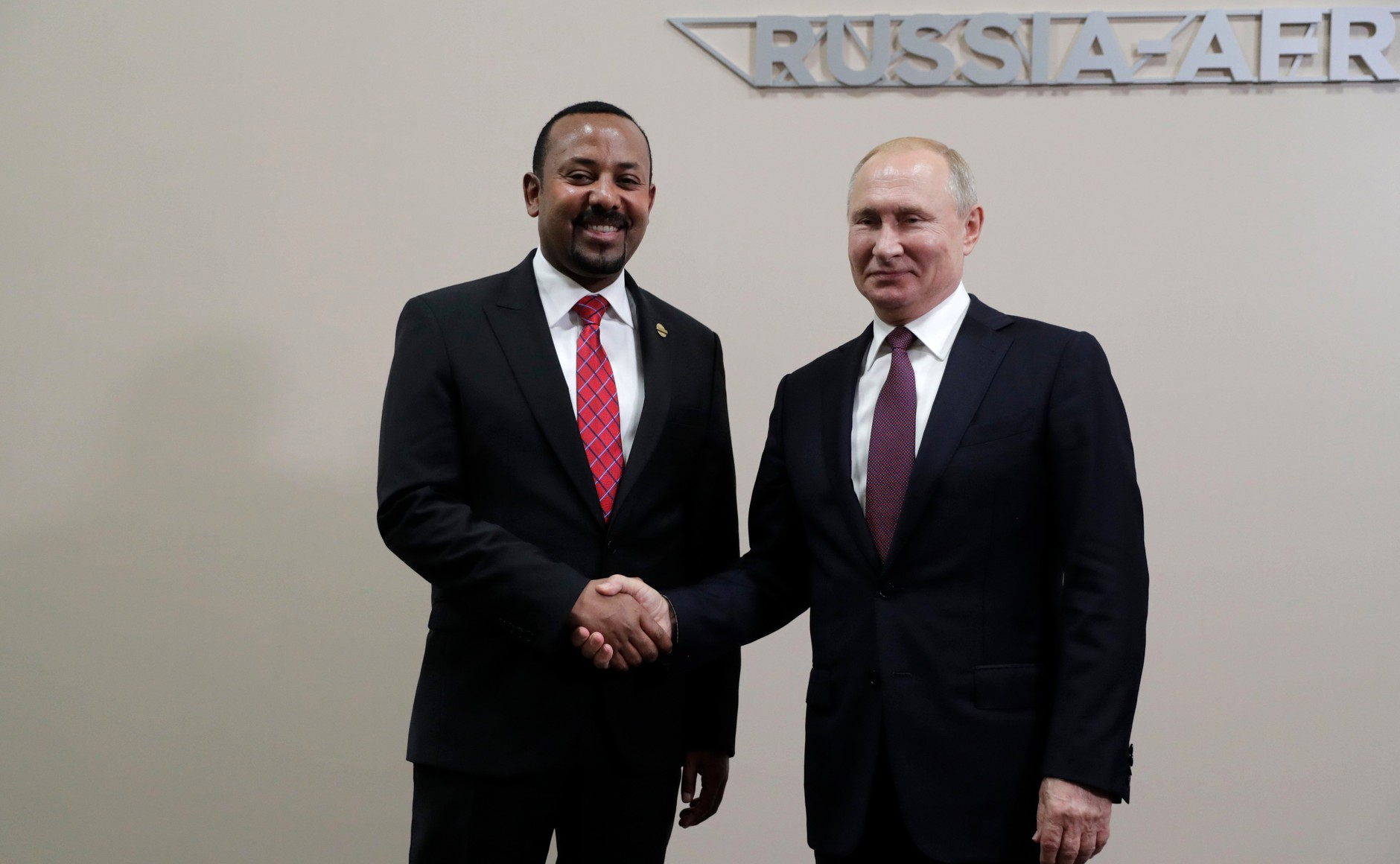

Ethiopia is deepening its strategic relationship with Russia as it seeks support for accession to the World Trade Organization (WTO) and advances plans to develop its first nuclear power facility.
During an official visit to Moscow, Ethiopian Foreign Minister Gedion Timothewos met with Russian officials, including Economic Development Minister Maksim Reshetnikov, to discuss expanded cooperation in trade, energy, and nuclear technology. Reshetnikov reaffirmed Moscow’s backing for Ethiopia’s WTO bid—support that aligns with Ethiopia’s broader economic reform efforts and push for global market integration.
The visit also underscored growing collaboration between Ethiopia and Russia’s state nuclear agency, Rosatom. Since signing a cooperation roadmap in 2019, both countries have taken steps toward establishing a civilian nuclear energy program in Ethiopia. Most recently, in September 2025, Rosatom and Ethiopian Electric Power signed an action plan to develop the country’s first nuclear power plant—part of a strategy to diversify Ethiopia’s energy mix and reduce dependence on hydropower.
According to Ethiopia’s Institute of Foreign Affairs, the Moscow trip marks a significant milestone in Addis Ababa’s efforts to expand global partnerships and engage more deeply in emerging technology sectors.
Russia’s growing role in Africa’s energy landscape is part of a broader geopolitical shift, as several African nations pivot toward partnerships with Moscow and Beijing amid shifting relations with Western powers. Russia is currently working with countries including Egypt, Nigeria, and Rwanda on nuclear energy development, often in parallel with military or security cooperation.
Ethiopia’s partnership with Russia also builds on its recent accession to the BRICS grouping—joining Brazil, Russia, India, China, and South Africa—giving Addis Ababa greater access to emerging markets and alternative financing structures.
Foreign Minister Gedion’s visit reflects Ethiopia’s broader diplomatic ambitions. By engaging Moscow, Addis Ababa signals its intention to secure strategic partnerships that reinforce national sovereignty, spur industrial development, and position the country more prominently on the global stage.

Leave a Reply