
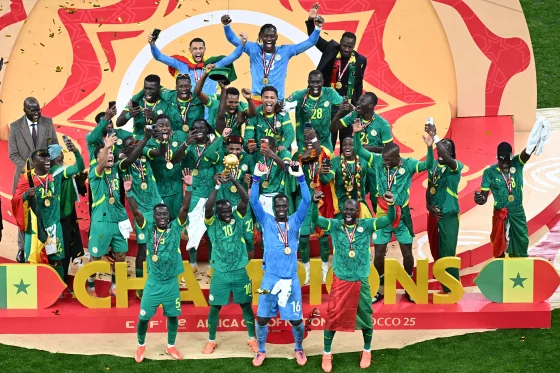
In a final as electrifying as it was emotional, Senegal emerged as champions of the Africa Cup of Nations on 18 January 2026, defeating host nation Morocco 1-0 after extra time in Rabat. The win marked Senegal’s second continental title, solidifying their place among Africa’s elite in world football.
From kick-off to the final whistle of normal time, the game was a strategic battle between two deeply competitive sides. Both teams boasted strong defenses and disciplined midfield play, resulting in a low-scoring 90 minutes that kept fans on edge. The powerful atmosphere of the packed Prince Moulay Abdellah Stadium reflected the immense stakes: Morocco were chasing their first AFCON title in half a century, while Senegal sought to reaffirm their position at the summit of African football.
As the match approached its closing stages, controversy rocked the final. A late VAR decision awarded Morocco a penalty, a call that sparked fury from Senegal’s players and coaching staff. In a rare and dramatic protest, Senegal briefly left the pitch, refusing to continue until the situation was resolved. After a long delay and persuasion from team leaders, they returned to the field.
Morocco’s Brahim Díaz stepped up for the spot-kick but opted for a bold Panenka attempt that was comfortably saved by Senegal’s veteran goalkeeper Édouard Mendy, keeping the score level and fueling Senegalese belief.
The breakthrough finally came four minutes into extra time. Midfielder Pape Gueye seized his moment, collecting the ball, advancing past defenders, and unleashing a powerful shot into the top corner, a strike that would define the night and etch his name in Senegalese football history.
Cue celebrations. The Senegalese bench erupted, the visiting fans erupted, and echoes of “Lions of Teranga” rang across the stadium as players embraced after an unforgettable moment.
For Senegal, this victory isn’t just a trophy, it’s validation of consistency, resilience, and tactical discipline. Their first title came in 2022, and now a second title in three editions marks them as a force that refuses to be overlooked. It’s a testament to the squad’s depth, leadership on the pitch, and belief in a shared vision.
President Bassirou Diomaye Faye described the victory as one of profound national pride, leading to jubilant celebrations across Senegal with fireworks, dancing, and a public holiday in honor of the team’s achievement.
It would be impossible to talk about this final without acknowledging the controversy. The late penalty and subsequent walk-off sparked intense debate among fans and pundits alike, with some calling into question officiating decisions and others lauding Senegal’s resolve. Whatever your perspective, the match delivered drama and storylines worthy of AFCON lore.
With the trophy in their hands, Senegal now turn their focus to the 2026 FIFA World Cup in the United States, a stage where they’ll aim to make their mark on the global game and carry the momentum of African champions with them.
In the end, Senegal didn’t just win a football match they etched a defining moment into the history of African sport. Their AFCON 2026 triumph will be talked about not just for the winning goal, but for the heart, resilience and sheer spectacle that defined a night in Rabat.